Background
The casting filter, the people who described it, and the economics that broke it
This is the substance of the page. Everything below is sourced to academic writing, national press or a primary award record, and none of it is an opinion about how anybody looks.
The preference is documented, and it is specific
Inka Winter and Kelsy Burke, writing in Sex Work Today: Erotic Labor in the Twenty-First Century (New York University Press, 2024), state it without hedging: because most pornographic content is produced for and by cisgender, heterosexual white men, "there is a preference in the industry for thinness and white actresses with large breasts." That is a commercial specification derived from an assumed buyer, published in a peer-reviewed academic press, and it is the single most useful sentence available on this subject.
Studios funded the procedures
Martin Amis, reporting on the industry for the Guardian in 2001, recorded that some film studios encourage their performers to have breast implants and offer to pay for the procedure. That converts an aesthetic preference into a capital expenditure, which is what makes it a filter rather than a taste: a studio that pays for a body modification has made an economic decision about what its product should look like, and every performer who declined has been priced accordingly.
And they graded people by it, out loud
In the same reporting, the actor-turned-director Jonathan Morgan described how the business sorted performers: "The girls could be graded like A, B and C. The A is the chick on the boxcover. She has the power." It is worth sitting with the fact that this is not a critic’s characterisation of the industry — it is a director explaining the system in his own words, on the record, to a national newspaper, without any apparent sense that it required defending.
The filter is applied to one sex and not the other
The on-screen appearance of female performers is treated as of primary importance and they are cast substantially younger than the men opposite them, who are hired principally on reliability. The pay follows the same asymmetry: roughly $1,000 for a woman in a heterosexual scene against $100 to $400 for a man. Any account of this standard that presents it as a neutral reflection of what audiences find attractive has to explain why it governs one half of the cast almost completely and the other half barely at all.
It also sets an expiry date
The same trade account describes a new performer’s first year in arithmetic: five films in the first week, a hundred in four months, and then, in the words quoted, she is not a fresh face any more. Novelty is the asset being sold, and novelty depreciates by design. This is why Longevity carries 19% of the score on this page and 10% everywhere else — in this category, a long career is not a bonus attribute, it is direct evidence that a performer was valued for something the filter does not measure.
Three performers ranked here have said publicly what it did to them
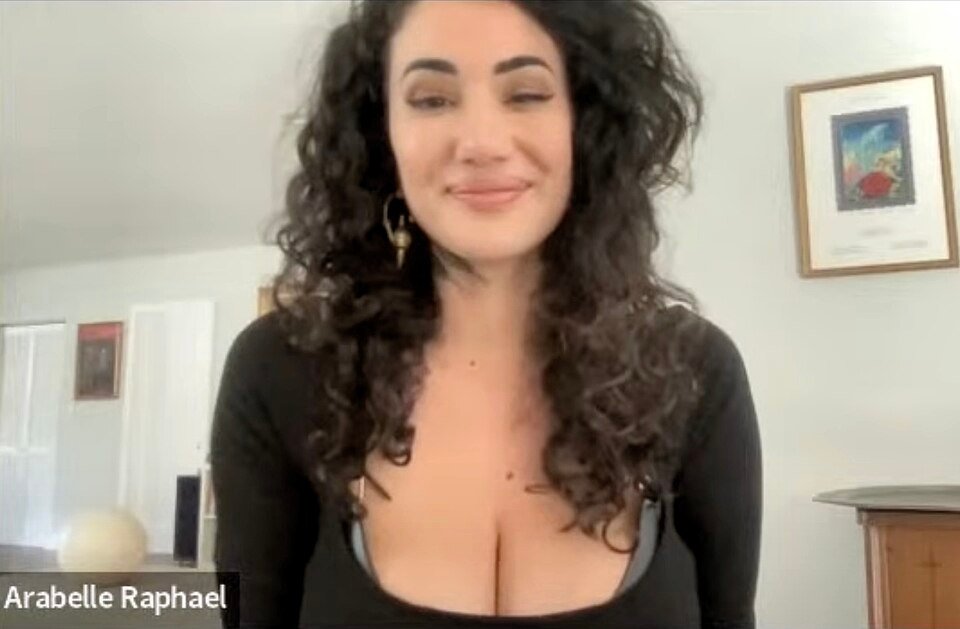
April Flores told Cosmopolitan in March 2015 that she wants people to see fat women as sexual beings, "because we are", and that she wants to reclaim the word as a positive one; she has separately criticised her own marketing category’s conventions as demeaning to the performers in it. Arabelle Raphael has said, in a KQED profile, that early in her career mainstream producers either fetishised her appearance or tried to make her look whiter. Jiz Lee has stated directly: "My sexual orientation is queer; so is my gender." These are the only accounts of anyone’s appearance on this page, they are all first-person and published, and each is cited on the performer’s own entry.
The counter-movement is a commercial category with its own awards
Alt porn emerged as a documented commercial sector from 1999 — GothicSluts.com first, Blue Blood magazine before it in 1992, SuicideGirls dominant from late 2001 — and Wikipedia’s own account records the sector’s founding argument as being over "whether alt porn venues should present models of all genders and a range of body types rather than just conventionally attractive young women." The Feminist Porn Awards began in Toronto in 2006, run by the sex shop Good for Her, with three stated criteria, the third of which is that the work expands boundaries and challenges mainstream porn stereotypes. Urban X launched in 2008. AVN introduced a juried BBW Performer of the Year category in January 2014. Each of these is a separate institution built to measure something the main circuits were not.
The creator platforms removed the gatekeeper entirely
OnlyFans launched in November 2016, lifted its ban on explicit content in 2017, and grew on the back of adult performers: over a million creators by December 2020, more than four million by 2024, and $30bn paid out cumulatively by August 2026 on an 80/20 split in the creator’s favour. That did not make anyone rich by default — the average creator earned under $1,300 in 2023 — but it dismantled the specific mechanism this article is about. A studio can decline to book a performer. It cannot decline to let an audience pay one directly, and the casting filter was only ever enforceable because somebody stood between the two.