Pornstar Ranked

Muslim Pornstars: What the Search Term Actually Describes

The most-searched name under this keyword is not Muslim. Mia Khalifa was raised Catholic in a Lebanese Catholic family, said publicly in January 2015 that she was no longer a practising Catholic, and has never at any point described herself as Muslim — and yet almost every page competing for this term puts her at the top of it.

She got there because of a costume. In late 2014 she filmed a scene wearing a hijab, the scene made her the most-searched performer on Pornhub within weeks, and the furore that followed did the rest.

An entire demographic search category was manufactured out of one item of clothing in one video by a woman whose religion it had nothing to do with.

The short answer

Rae Lil Black ranks first on the only test this page applies: in March 2025 she publicly announced her conversion to Islam, took the name Nuray Istiqbal and removed her adult catalogue. Six performers worldwide have identified themselves in a citable source. Mia Khalifa, the most-searched name under this term, is Lebanese Catholic and is not one.

All 6, ranked

Sort by any column. Full profiles follow below; the scoring rubric that produced this order is at the foot of the page.

6 performers
# Performer Index Active Wins HoF Strongest pillar Data
1
Rae Lil Black
Built for Western platforms, then left the industry entirely
91.1 2018 2 — Industry Recognition medium
2
Yasmine Lafitte
Born in a Moroccan village, became Marc Dorcel’s exclusive, retired at the top
88.0 2004 2 — Body of Work high
3
King Noire
Rapper, sex educator and performer who came to Islam through the Autobiography of Malcolm X
85.1 null 0 — Influence & Crossover medium
4
Sahara Knite
British-Gujarati performer, Game of Thrones actor and industry organiser
76.7 2004 1 — Longevity & Consistency high
5
YA Yasmeena Ali
Born in Kabul, left the faith in public, and her father was arrested over a plot to kill her
75.6 2017 0 — Longevity & Consistency medium
6
NA Nadia Ali
Eighteen months of work, and a decade of argument about it
67.6 2015 0 — Longevity & Consistency low
0
Hall of Fame inductions across the list
5
Verified competitive award wins
2,098
Combined years active
118
Names on the longlist before cuts
80.7
Average index score of the top 20

Wins count verified competitive awards only; nominations are shown on each profile but excluded from this column. “Data” is our confidence in the underlying record — see each profile for exactly which fields are unconfirmed.

The ranking

The six performers who have identified themselves, in their own words

Here is the rule that produced this list, printed before the list rather than buried under it. A performer appears below only where they have stated publicly, in their own words, in a source that can be cited, that they are Muslim or that they were raised Muslim. Their own interview, their own public statement, their own broadcast, or named contemporaneous press reporting what they said. Never a stage name, never a country of birth, never an ethnicity, never a family, never a Wikipedia category, never an unreferenced database field, and never what another list has said. That is the only difference between this page and the fifteen-name versions of it, and it is a large one: every competitor ranking under this term has inferred most of its roster from photographs and passports. Two of the six below say they have left the faith, and their entries report what they actually said rather than collapsing it into "is Muslim", because a person who tells you she is no longer a believer has still told you something about herself and it is not the same fact. Each entry carries the same structure as every other profile in the programme: the facts we could source, the score across all six pillars, our argument for the placement, the argument against it, and the sources.

1
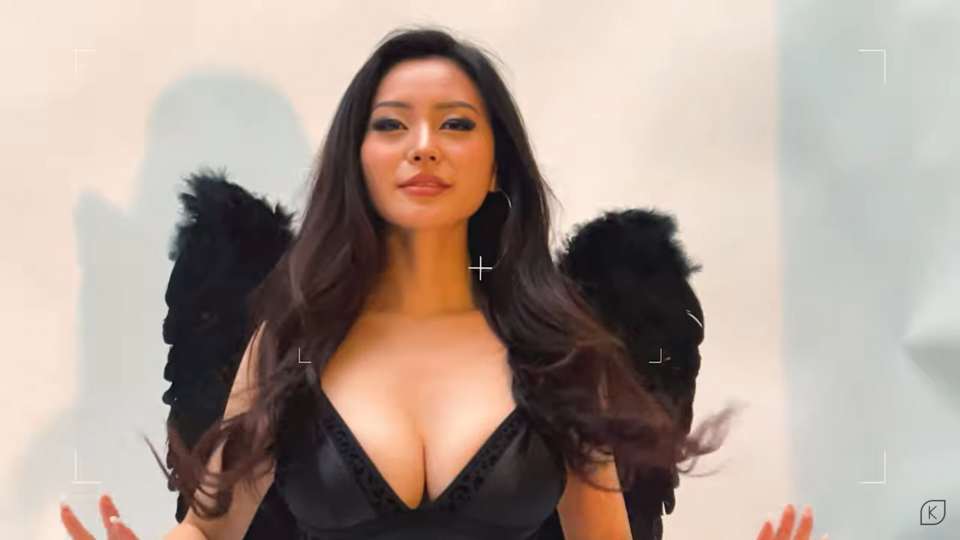
Rae Lil Black — photograph 1 of 3
RLPornhub winner 2022
RL
Kiiroo · CC BY 3.0 · via Wikimedia Commons

1. Rae Lil Black

Built for Western platforms, then left the industry entirely
91.1
Index
retired medium confidence 2 verified wins
Born
1996Osaka, Japan
Age
30
Active
2018–2018–c.2024; left the industry in 2025
Credits
—2 studios
Height
—
Hair / Eyes
—not documented
Why Rae ranks 1st

Hers is the least ambiguous self-identification in this category anywhere, and she made it herself in public, repeatedly, to an international press pack.

She debuted at twenty in 2018 and built the whole career on Western digital distribution rather than the Japanese studio system, taking XBIZ, AVN, GayVN and Pornhub nominations between 2019 and 2024 and placing eighteenth in Pornhub’s 2022 performer ranking.

In October 2024 she began posting in hijab; in March 2025 she announced that she had embraced Islam, took the name Nuray Istiqbal, fasted for Ramadan and pulled her adult content from every platform.

The South China Morning Post, the Toronto Sun and outlets across South and Southeast Asia covered it, and English Wikipedia’s list of converts to Islam records her on the strength of that coverage. On this page’s only criterion — did the person say it, and can it be cited — nothing else comes close.

The case against: The strongest argument against her placement is one she has made herself: she has said she wants to be seen apart from the work, and a page that ranks her under this keyword is doing precisely what she asked people to stop doing. We have kept her here because the alternative is a page about Muslim performers that omits the only globally covered case, and because she chose to make the conversion public rather than having it exposed. Read the number with that in mind. Beyond the ethics, her record is thinner than the index makes it look: she has no competitive win anywhere, only nominations and platform rankings; her discrete title count has never been published; her birth name is disputed across sources; and the conversion is eighteen months old, which is not long enough to know what it settles into.
Ranked alongside

Ranked alongside

Score breakdown
Industry Recognition 12%
9.9
Body of Work 14%
9.6
Show all six pillars (4 more) Show fewer
Audience Demand 20%
9.8
Craft & Screen Presence 8%
9.2
Longevity & Consistency 10%
8.6
Influence & Crossover 36%
8.4
Career and credits

Career

Debuting at twenty in 2018, she built her following on Western digital platforms rather than the Japanese studio system, drawing XBIZ, AVN and GayVN nominations between 2020 and 2024. She moved into a large mainstream social-media career as a YouTube, TikTok and Twitch creator, delivering a TEDx talk in Bangkok in 2023. In 2025 she converted to Islam, adopted a new name and removed her adult content from all platforms.

Signature: A Japanese performer who never really worked in the Japanese industry — she was a Western-platform creator from the start, which is why her exit was total rather than a graduation.

Studios

Vixen Media GroupNutaku
Award record
  • 2022Pornhub — 18th-place performer ranking
  • 2020Pornhub — Top 30 performer ranking
Show full award record (1 more) Show fewer
  • 2019Pornhub Awards — Nominations, two categories

Beyond performing

  • Direct-to-fan platform, discontinued 2025

Mainstream credits

  • YouTube channel (332k subscribers)
  • TEDx Bangkok (2023)
  • Richardson magazine cover
Official links
Sources and verification1 source
Last audited 22 August 2026 · Wikipedia — Rae Lil Black
Not yet confirmed:
  • Birth name disputed across sources
2
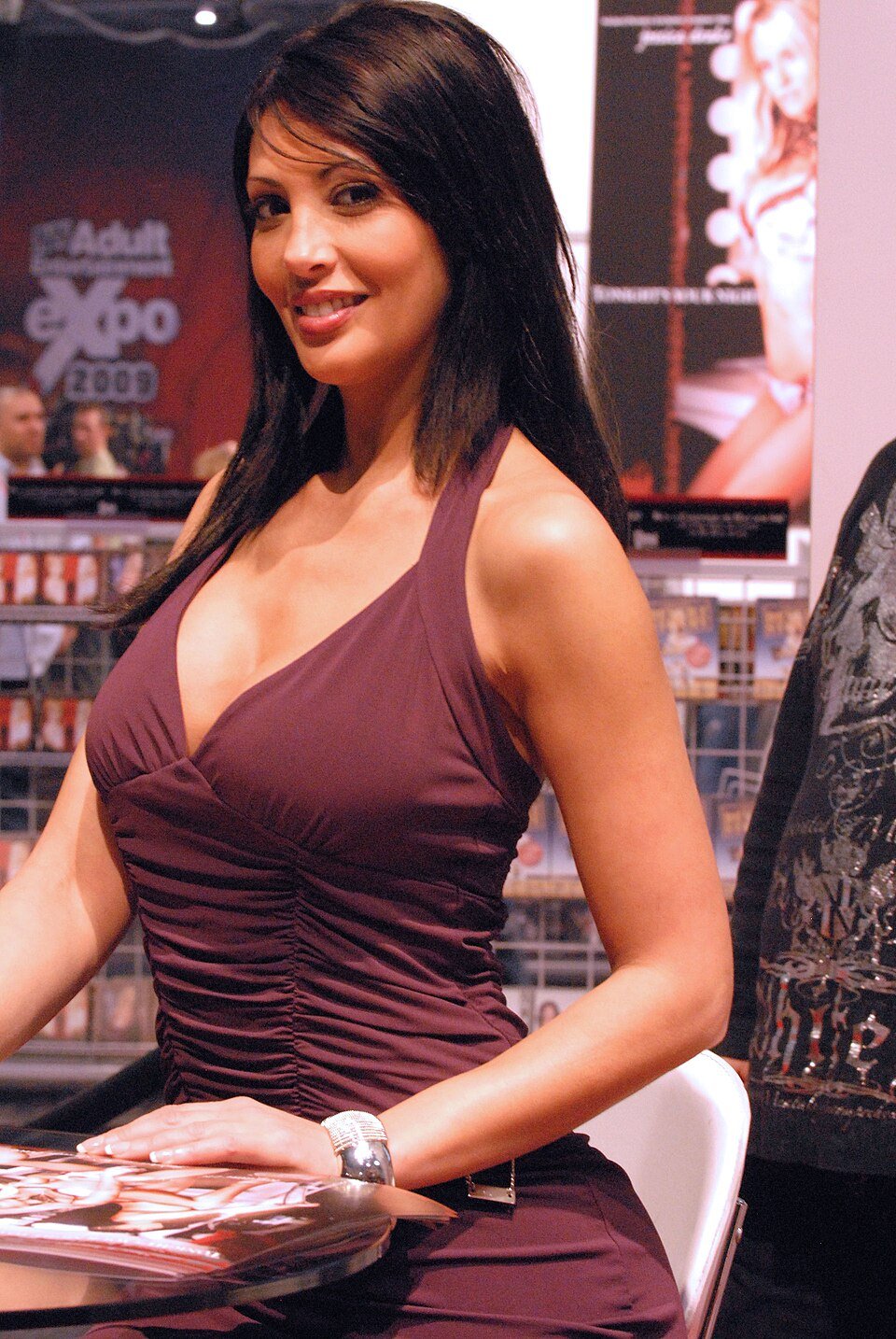
Yasmine Lafitte — photograph 1 of 3
YLEroticline Award winner 2008
YL
Photos by flipchip / LasVegasVegas.com · CC BY-SA 3.0 · via Wikimedia Commons

2. Yasmine Lafitte

Born in a Moroccan village, became Marc Dorcel’s exclusive, retired at the top
88.0
Index
retired high confidence 2 verified wins
Born
—Tahar Souk, Morocco
Age
—
Active
2004–Entered the industry in 2004; retired from adult performing in February 2009 to work in mainstream film and production.
Credits
—2 studios
Height
—
Hair / Eyes
—not documented
Why Yasmine ranks 2nd

She gave the single most direct answer anybody in this category has given, to a journalist, on the record, in the middle of the argument about her.

Interviewed by Stéphanie Plasse for Afrik.com in December 2009 under the headline "Yasmine: sexe, islam et blouse blanche", she said of her critics: "Certes, je suis musulmane mais cela ne m’empêche pas d’être une star du X et d’aimer mon travail" — yes, I am Muslim, and it does not stop me being an adult star and loving my work.

She added that Arabic writing is full of erotic scenes, that she does what she loves, and that if she has to answer to anyone it is only to God.

Born in the village of Tahar Souk in Morocco — the origin that also places her on our Arab pornstars ranking — and raised in a practising Muslim family outside Lyon, she entered the industry in 2004, signed as a Marc Dorcel exclusive in 2007, took a significant role in Danielle Arbid’s A Lost Man at the 60th Cannes Film Festival that same year, and retired in February 2009 at the top.

The case against: The statement is nearly seventeen years old and she has not repeated it publicly since retiring, so this page is ranking a position she held in 2009 rather than one she has confirmed recently — and the same interview records her family cutting contact after a television programme exposed the work, which is a reason a person might stop discussing any of it. Her professional record has real holes: Wikipedia files her under "year of birth missing", two of her four listed awards have carried citation-needed tags since 2014 and are not scored here, and no credit count exists. Her Wikidata religion value, like everyone else’s in this field, is an unreferenced bot import and contributes nothing. The Demand figure on her record is set editorially rather than measured, because no reliable measure of her individual name recognition exists to score.
Ranked alongside

Ranked alongside

Score breakdown
Industry Recognition 12%
9.2
Body of Work 14%
9.6
Show all six pillars (4 more) Show fewer
Audience Demand 20%
7.5
Craft & Screen Presence 8%
9.2
Longevity & Consistency 10%
8.0
Influence & Crossover 36%
9.2
Editorial override. Demand set editorially, mid-field. At her peak she was a Marc Dorcel exclusive, an FHM spokesmodel and a French prime-time talk-show guest, with sustained coverage in Le Figaro, Les Inrocks, Tribune de Genève and the Moroccan press — genuine mainstream visibility, but confined to one language market and now seventeen years old, with no current measurement of any kind.
Career and credits

Career

Lafitte was born into an observant Muslim family in Tahar Souk, a small village in Morocco, and moved to France with her family when she was five months old, growing up in a suburb of Lyon. She left home at eighteen after finishing school, trained as a nurse and worked as a waitress to pay for her studies. In 2004 she answered a small production company’s magazine advertisement for amateur couples and entered the adult industry with her boyfriend of the time. She co-founded the production company Alko Productions in 2005, appeared on TF1’s La Méthode Cauet in 2006 and became a spokesmodel for FHM, and in 2007 signed an exclusive contract with Marc Dorcel — the point at which Moroccan press began covering her, Maroc Hebdo running a piece headlined "la nouvelle Dorcel Girl marocaine". The same year she took a significant role in Danielle Arbid’s A Lost Man, which premiered at the 60th Cannes Film Festival, and in 2008 a supporting role in Olivier Marchal’s MR 73. She retired from adult performing in February 2009.

Signature: She is the only performer under this keyword who was covered as a national story in an Arab country while she was still working — profiled by TelQuel and Maroc Hebdo as a Moroccan public figure rather than being discovered by a list-writer years afterwards.

Best known for

A Lost Man (2007, dir. Danielle Arbid — premiered at the 60th Cannes Film Festival)MR 73 (2008, dir. Olivier Marchal)

Studios

Marc DorcelAlko Productions
Award record
  • 2007Venus Award — Best European Actress
  • 2008Eroticline Award — Best European Actress

Beyond performing

  • Alko Productions (co-founded 2005, with Olivier Lafitte)

Mainstream credits

  • A Lost Man (2007, 60th Cannes Film Festival)
  • MR 73 (2008)
  • La Méthode Cauet (TF1, 2006)
  • FHM spokesmodel (2006)
Official links
Sources and verification4 sources
Not yet confirmed:
  • Date of birth — Wikipedia files her under "Year of birth missing"
  • Two further awards, 2007 and 2008 X Awards Best Actress, are listed on her Wikipedia article but have carried a citation-needed tag since January 2014. They are not scored here
  • Total credit count
  • Her own religious identification, as distinct from the family she was born into
3
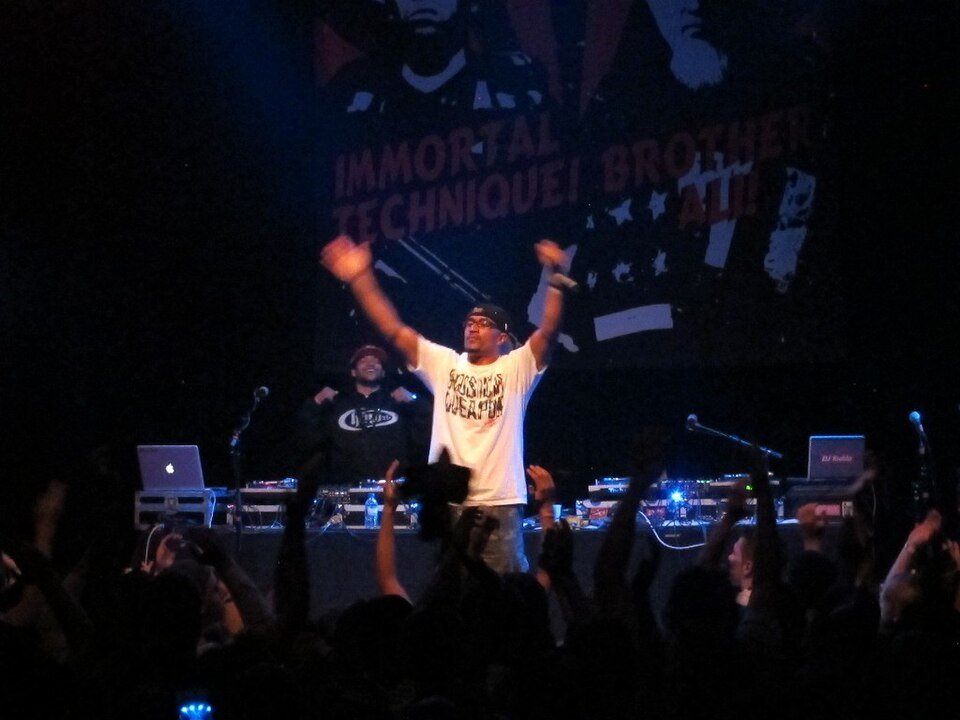
King Noire — photograph 1 of 3
KN
KN
Jester Jay Goldman · CC BY-SA 2.0 · via Wikimedia Commons

3. King Noire

Rapper, sex educator and performer who came to Islam through the Autobiography of Malcolm X
85.1
Index
active medium confidence 0 verified wins
Born
1981New York City, United States
Age
45
Active
null–English Wikipedia records that he entered the adult industry as a teenager, beginning with a magazine shoot, and gives no year. No debut date is published anywhere we would cite, so none is asserted here and the Longevity pillar scores him at zero rather than on a guess.
Credits
—
Height
—
Hair / Eyes
—not documented
Why King ranks 3rd

He is the only man on this page and the only person on it who describes arriving at the faith through a book rather than inheriting it, and he set the whole thing out himself in a published interview.

Asked by God Is In The TV in June 2013 whether he found it hard being a Muslim given the coverage of Islam, he answered directly — no — and went on: "I don’t like to call myself Sunni or Shia.

I’ve learnt from a lot of people... we need to keep to our core of the five pillars." In the same interview he described being raised Christian, reading the Bible cover to cover at thirteen, being told to stop asking questions, and coming to Islam after his mother made him read the Autobiography of Malcolm X before she would let him watch the film.

Asked whether his faith played a part in his music he said absolutely, and that his music played a part in his faith. He has performed as King Noire since his teens, co-owns Royal Fetish Films, and was the performer Esquire built its 2017 investigation of racism in pornography around.

The case against: The interview that qualifies him ran in a music webzine rather than a national outlet, which is a weaker publication than the sources behind anybody else here, and it is thirteen years old. His record is also awkward for this index in two directions. English Wikipedia says he entered the industry "as a teenager" and gives no year: nothing on file documents a credit produced before he turned eighteen, so he is not excluded under our policy against ranking anyone whose adult-industry debut may have occurred while underage, but the wording is genuinely ambiguous and we would rather print that than smooth it over. And his substantial award record — Best Live Performance and Best Underground Song at the 2005 Underground Music Awards — is a music record, so it is deliberately kept out of the awards field the Recognition pillar reads, which leaves him scoring zero on Recognition and zero on Longevity for a career that has plainly run more than twenty years.
Ranked alongside

Ranked alongside

Score breakdown
Industry Recognition 12%
7.1
Body of Work 14%
8.5
Show all six pillars (4 more) Show fewer
Audience Demand 20%
7.8
Craft & Screen Presence 8%
8.5
Longevity & Consistency 10%
6.6
Influence & Crossover 36%
9.9
Career and credits

Career

Born in New York City in January 1981 and raised in New Jersey by his mother, an only child. He began rapping at ten. Raised Christian, he says he read the Bible cover to cover at thirteen, was told not to ask questions about it, and came to Islam after reading the Autobiography of Malcolm X — a condition his mother set before letting him see the 1992 film. He entered the adult industry as a teenager, starting with a magazine shoot he accompanied a friend to, and moved from there into live shows and film, performing as King Noire. He has been publicly and repeatedly outspoken about racism in pornography, has refused work he considered discriminatory and has lectured on it, and was one of the performers Esquire built its 2017 investigation of racism in the industry around. He co-owns Royal Fetish Films, the Body Altitudes gym and the Jet Setting Jasmine brand with Jasmine Johnson, and teaches the Steel & Stilettos classes. In parallel he has released five records as Hasan Salaam, won Best Live Performance and Best Underground Song at the 2005 Underground Music Awards, toured internationally, and in November 2010 became the first American hip hop artist to perform in Guinea-Bissau.

Signature: The only man on this page, the only convert to Islam on it who arrived through Malcolm X rather than through a country, and the only performer here whose public argument is about race in the industry rather than about faith.

Best known for

Children of God (2008) — third studio album, described as themed across religionsMusic Is My Weapon (2011) — EP whose profits funded a well, school and clinic in Guinea-Bissau

Studios

Royal Fetish Films

Beyond performing

  • Royal Fetish Films (co-owner, with Jasmine Johnson)
  • Body Altitudes gym (co-owner)
  • Jet Setting Jasmine (co-owner)
  • Steel & Stilettos workout classes (co-creator)

Mainstream credits

  • Five albums and EPs as the rapper Hasan Salaam, including Children of God (2008)
  • Esquire, "Racism in Porn", 8 June 2017 — named investigation built around his account
  • Ebony, February 2017 — feature on his and Jasmine Johnson’s work
  • First American hip hop artist to perform in Guinea-Bissau, November 2010
  • Public lecturing on racism in the adult industry
Official links
Sources and verification5 sources
Not yet confirmed:
  • Debut year in the adult industry. English Wikipedia says "as a teenager" and gives no year. Nothing on file documents a credit produced before he turned eighteen, and the programme’s under-18 exclusion is therefore not triggered — but the wording is ambiguous and is flagged here rather than resolved
  • Credit count and studio affiliations beyond Royal Fetish Films
  • His 2005 Underground Music Awards wins are music awards and are deliberately not entered in the awards array, which the Recognition pillar reads as adult-industry recognition
  • Height, hair and eye colour are not recorded by any encyclopaedic source
  • Birthplace: English Wikipedia says born in New York City and raised in New Jersey; Wikidata gives origin as New Jersey
4
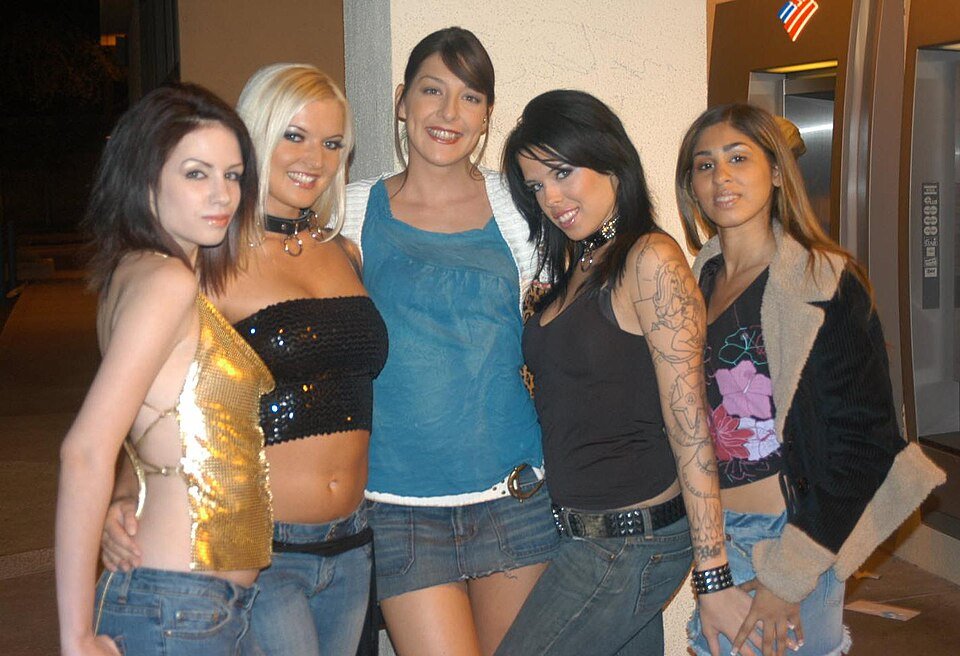
Sahara Knite — photograph 1 of 3
Sahara Knite — photograph 2 of 3
Sahara Knite — photograph 3 of 3
Photo from www.lukeisback.com · CC BY-SA 2.5 · via Wikimedia Commons

4. Sahara Knite

British-Gujarati performer, Game of Thrones actor and industry organiser
76.7
Index
selective high confidence 1 verified win
Born
1975London, England
Age
51
Active
2004–Active in British adult film from the mid-2000s; now works primarily as a dominatrix, session wrestler and industry representative.
Credits
—
Height
—
Hair / Eyes
—not documented
Why Sahara ranks 4th

She is the longest-running case in this category and the plainest one: the description "Indian Muslim Sahara Knite" is not a label somebody hung on her, it is the wording she publishes video under on her own official channel, in her own name, today.

It matches what she told Times News Network in April 2006, in an interview headlined The Confessions of a Porn Star, where she gave her background as an Indian Muslim family from Gujarat that had moved to London in the sixties and described herself as still religious in the middle of an adult career.

Born Saeeda Vorajee in 1975, she entered the British industry in 2004 at a point when almost nobody of Indian origin was working in it — she is ranked second on the Indian pornstars index — was the subject of the Channel 4 documentary The Dark Side of Porn: Diary of a Porn Virgin in 2005, played Armeca across the first two seasons of Game of Thrones, and became chairperson of United Kingdom Adult Professionals in 2019. Twenty-two years of being publicly both things at once, with no reversal and no retraction.

The case against: The sourcing under the faith claim is thinner than the length of her career suggests. Her English Wikipedia article says nothing about religion at all; the 2006 interview that carries the direct quotation is a print piece we have located by citation rather than read in full; and her Wikidata religion field is an unreferenced import from the French Wikipedia, which is worth nothing. What remains load-bearing is her own current self-description on a channel she controls, which is good evidence and is not the same as a national broadcaster’s transcript. The professional record has gaps too: no consolidated credit count exists, no studio affiliations are documented, and her single award is a 2023 industry contribution prize rather than a competitive performance win. Her date of birth comes from database sources rather than from Wikipedia.
Ranked alongside

Ranked alongside

Score breakdown
Industry Recognition 12%
8.5
Body of Work 14%
7.1
Show all six pillars (4 more) Show fewer
Audience Demand 20%
7.8
Craft & Screen Presence 8%
7.7
Longevity & Consistency 10%
10.0
Influence & Crossover 36%
6.9
Career and credits

Career

Born Saeeda Vorajee in London to a family of Gujarati Indian descent, she entered the British adult industry in the mid-2000s, at a point when there were very few performers of Indian origin working in it. Her entry was documented in the 2005 Channel 4 series The Dark Side of Porn. She had a recurring role as the character Armeca in the first two seasons of Game of Thrones and a small role in the 2020 mini-series Brave New World. In 2019 she became chairperson of United Kingdom Adult Professionals, the industry body, and works as a sex-worker rights advocate.

Signature: She is the clearest example of a performer of Indian descent who moved into governance and advocacy rather than mainstream entertainment, chairing a national industry organisation.

Best known for

Game of Thrones (2011–2012, as Armeca)The Dark Side of Porn: Diary of a Porn Virgin (Channel 4, 2005)Brave New World (2020)
Award record
  • 2023SNAP Awards — Outstanding Contribution to the UK Adult Industry

Mainstream credits

  • Game of Thrones (HBO)
  • Brave New World (Peacock)
Official links
Sources and verification2 sources
Last audited 22 August 2026 · Wikipedia — Sahara Knite · IMDb — Sahara Knite
Not yet confirmed:
  • Date of birth (given by database sources rather than Wikipedia)
  • Exact debut year
  • Studio affiliations
5
YADebut 2017
YA
YA
Illustrated placeholder — no licensed photograph on file

5. Yasmeena Ali

Born in Kabul, left the faith in public, and her father was arrested over a plot to kill her
75.6
Index
active medium confidence 0 verified wins
Born
1993Kabul, Afghanistan
Age
33
Active
2017–Wikidata records a work period beginning in 2017; the earliest press coverage of her adult career is from August 2018. No debut date has been published by any encyclopaedic source.
Credits
—
Height
—
Hair / Eyes
—not documented
Why Yasmeena ranks 5th

She belongs here on the second limb of this page’s rule rather than the first, and the entry states the difference plainly: she does not say she is Muslim, she says she was raised one and left.

English Wikipedia records that her parents raised her as Muslim and that she was not religious herself; she has since converted formally to Judaism and then described herself as an atheist.

What makes the statement citable rather than inferred is that she has made it repeatedly and in public — to the New York Post in February 2022, and at length in Channel 4’s 2022 documentary Afghanistan’s Top Porn Star, a film about her in which she speaks for herself.

It is also the only case in this category where the account has been tested outside journalism: The Independent reported in September 2019 that two men had been arrested over a plot to kidnap and murder a woman who had renounced Islam, and the National Crime Agency identified them as her father and his cousin, who travelled to Slovakia in 2018 to find her and were offered a killing for $70,000.

The case against: She is the entry most at risk of being read as something she has not claimed, and a page about Muslim performers that ranks a self-described atheist owes the reader that sentence in bold. Everything she says about Islam now she says as a critic of it, and English Wikipedia files her under both "former Sunni Muslims" and "critics of Islam"; presenting her as a Muslim pornstar would misdescribe her exactly as badly as the pages this one is correcting. The professional record is also the thinnest here. No debut date has been published — 2017 is an unreferenced Wikidata work-period value against press coverage beginning in August 2018 — there is no credit count, no studio, and no award or nomination of any kind. Almost everything the index can see about her is a news story about a crime committed against her rather than a body of work.
Ranked alongside

Ranked alongside

Score breakdown
Industry Recognition 12%
7.1
Body of Work 14%
7.1
Show all six pillars (4 more) Show fewer
Audience Demand 20%
7.1
Craft & Screen Presence 8%
7.4
Longevity & Consistency 10%
9.3
Influence & Crossover 36%
7.7
Career and credits

Career

Born in Kabul in December 1993, during the civil war, she moved with her family to England at the age of seven after the 2001 United States invasion of Afghanistan. English Wikipedia records that her parents raised her as Muslim and that she herself was not religious; at nineteen she began a relationship with a Jewish man, after which her family put her out of the house and cut contact. She took a social work degree, met the director David Cohen, whom she later married, and entered the adult industry through him. She converted formally to Judaism, her husband’s religion, and has since described herself as an atheist. The couple lived in Austria and moved to Slovakia in 2017. In 2019 her father and his cousin were arrested in the United Kingdom over a plot to kill her; the National Crime Agency stated that the men travelled to Slovakia in 2018 to find her and that a hitman offered to do it for $70,000. She was the subject of the Channel 4 documentary Afghanistan’s Top Porn Star in 2022 and now speaks publicly on women’s rights, and on what she describes as liberal silence about violations of them.

Signature: The only performer in this category whose account of leaving the faith was tested in a criminal court file rather than only in an interview.

Best known for

Afghanistan’s Top Porn Star (Channel 4 documentary, 2022)

Mainstream credits

  • Afghanistan’s Top Porn Star (Channel 4, 2022) — feature documentary in which she is the subject
  • Interview with the New York Post, 1 February 2022, on the Taliban, her family and leaving Islam
  • Women’s rights advocacy and public commentary on religious coercion
Official links
Sources and verification5 sources
Not yet confirmed:
  • Debut year — 2017 is a Wikidata work-period value with no reference; the earliest press coverage of her adult career is August 2018
  • Total credit count and studio affiliations — no consolidated list exists
  • The extradition proceedings against her father and his cousin: reported by the National Crime Agency and the press in 2019 and 2020, with no published outcome located
  • Height, hair and eye colour are not recorded by any encyclopaedic source
6
NADebut 2015
NA
NA
Illustrated placeholder — no licensed photograph on file

6. Nadia Ali

Eighteen months of work, and a decade of argument about it
67.6
Index
retired low confidence 0 verified wins
Born
1990not documented
Age
36
Active
2015–2015–2016
Credits
~20
Height
—
Hair / Eyes
—not documented
Why Nadia ranks 6th

Ali is the only person this search term has ever accurately described, and she described herself before anybody else did.

Raised Muslim in New Jersey by a Pakistani family — she is also ranked on the desi pornstars page — she entered the industry in 2015, told Vice in May 2016 "I am a practicing Muslim. What you do is not who you are.

I pray in the morning, and I’m an exotic dancer at night", and told Refinery29 that July that she still identified as one and had struggled with the contradiction between the work and the religion.

Those are sentences she chose to say, on the record, under her own name, while she was still performing — which is the entire standard this page applies.

She wore hijab on camera deliberately, gave three further interviews to The Daily Beast across 2016 and 2018, and left the business in 2016 after her mother found out. Everything documented about her faith comes from her.

The case against: On the measures the index actually reads she is thin, and the score reflects it honestly. Roughly twenty scenes across about eighteen months, no award or nomination of any kind, no studio she was contracted to, and a career that ended a decade ago. Her birth year is recorded as either 1990 or 1991, her birthplace is not documented anywhere we can cite — English Wikipedia records only that she was raised in New Jersey, and the Wikidata value is an unreferenced import, so this page asserts no birthplace for her and no Pakistani birth — and the reported ban on her entering Pakistan is not confirmed by any government source we could find — it is her account, repeated by the press, and it is presented here as her account. There is also a plain reading of her record in which the hijab was a commercial decision as much as a religious one: she has said she was encouraged to wear it because the taboo sold, and she said that too.
Ranked alongside

Ranked alongside

Score breakdown
Industry Recognition 12%
7.1
Body of Work 14%
7.1
Show all six pillars (4 more) Show fewer
Audience Demand 20%
7.1
Craft & Screen Presence 8%
6.7
Longevity & Consistency 10%
7.3
Influence & Crossover 36%
6.2
Measured. Audience Demand for Nadia Ali is measured from branded search interest, not estimated.
Career and credits

Career

Raised Muslim in New Jersey by a Pakistani family, Ali worked as an eyebrow threader in San Francisco and then as a dancer before entering the adult industry in 2015. She performed in hijab, which is what generated most of the coverage, and left the business in 2016 after her mother found out. She received online death threats, was reported to have been barred from Pakistan, and cancelled scheduled appearances after the Pulse nightclub shooting in Orlando in June 2016. She opened a beauty bar in Los Angeles in 2018 and works as a cosmetologist. She speaks English, Hindi, Urdu and Pahadi.

Signature: The most extensively interviewed South Asian performer in the American industry, and the only one whose public argument was specifically about religion.

Beyond performing

  • Onai Here 2 Slay beauty bar, Los Angeles (2018)

Mainstream credits

  • Long-form interviews on faith and sex work in The Daily Beast (2016 and 2018) and Refinery29 (2016)
Official links
Sources and verification2 sources
Not yet confirmed:
  • Year of birth given as 1990 or 1991 by English Wikipedia; Wikidata gives 22 July 1991
  • Birthplace is not asserted at all. English Wikipedia records only that she was raised in New Jersey; the Wikidata value "Trenton" is imported from the Persian Wikipedia rather than referenced to a source; and the claim that she was born in Pakistan is supported by nothing on file. It was asserted in earlier editions of our Indian and Punjabi rankings and has since been withdrawn on both. Corrected 2026-08-22.
  • Pakistani descent is documented (English Wikipedia describes her as Pakistani-American and raised by a Pakistani family); Pakistani birth or citizenship is not
  • The reported ban on her entering Pakistan is not confirmed by any government source
Definitions

A faith is not an ethnicity, and it is not a nationality either

Muslim describes a person who follows Islam. It is a religious identity, held or not held, and it is not visible, not inherited in the way an ethnicity is, and not recorded on anybody’s filmography. Around two billion people are Muslim, roughly a quarter of the world, and they are spread across essentially every country on earth. The largest Muslim population in the world is Indonesian: nearly 250 million people, about an eighth of all Muslims alive. Pakistan, India and Bangladesh follow. Only about a fifth of the world’s Muslims live in the Arab world at all, and the whole Middle East and North Africa region accounts for under a quarter of them.

This is where the search term falls apart, and it falls apart immediately. "Muslim" is not a synonym for "Arab performer" — most Muslims are not Arab, and a substantial minority of Arabs are not Muslim. It is not a synonym for "Middle Eastern" either: Iran is Persian, Turkey is Turkish, and neither is Arab, while Indonesian performers and Bangladesh are neither Arab nor Middle Eastern and between them hold a fifth of the world’s Muslims. And it is not a synonym for any of the diaspora shorthand that gets used in its place — South Asian, desi, brown. What lists under this keyword are actually doing is looking at photographs, reading a stage name, checking a country of birth, and calling the result a religion.

Our six ranked performers are a demonstration of that on their own. They are Gujarati Indian, Pakistani American, Japanese by birth, Moroccan French, African American and Afghan British. One is a man. Two describe themselves as no longer believing. Not one of them would have been produced by looking at photographs, and two of them — a Japanese woman from Osaka and an American rapper who arrived at Islam through a book about Malcolm X — are the exact opposite of what the search term assumes. The conflation runs in both directions and produces errors in both. Mia Khalifa is Arab and Catholic, which breaks the term one way. Rae Lil Black is Japanese and Muslim, which breaks it the other. Sunny Leone was born Karenjit Kaur Vohra to a Sikh Punjabi family and has spoken about her own faith directly, in exactly the kind of interview this page treats as evidence — and what she said was that she is Sikh.

There is also a usage distinction worth making, because the secondary keywords for this page mangle it. "Islamic" describes things — Islamic law, Islamic art, Islamic finance. "Muslim" describes people. There is no such thing as an "Islamic pornstar" in any sense the word carries; a person is Muslim, an institution or a tradition is Islamic. This is a small point about English, but it is a reliable tell: pages that use the two words interchangeably are pages assembled without checking what either one actually means.

What remains, once faith, ethnicity and nationality are separated from each other, is a marketing category built on one item of clothing. The hijab scene is a production genre with its own tagging, its own set dressing and its own performers, and the performers in it are cast for how they look on camera. It is a costume department decision. It documents nothing about the person wearing it, and every single one of the misidentifications corrected further down this page traces back to somebody reading a costume as a confession of faith.

TermWhat it meansHow it differs
MuslimA person who follows Islam. Roughly two billion people, about 25.6% of the world in 2020, with the largest single population in Indonesia at nearly 250 million.A belief, held by a person. Not an ethnicity, not a nationality, not a look, and not something recorded anywhere in an adult performer’s professional documentation.
IslamicAn adjective for institutions, law, art, scholarship and tradition — Islamic jurisprudence, Islamic architecture, Islamic banking.Not a word that applies to people. "Islamic pornstar" is not a description of anybody; it is a search phrase. Pages using it interchangeably with "Muslim" were built without checking either word.
ArabAn ethnolinguistic group across twenty-two Arab League states, defined by Arabic as a native language and a shared cultural history.Roughly a fifth of the world’s Muslims are Arab. Most Arabs are Muslim; most Muslims are not. Our separate Arab pornstars index covers that population and finds six people.
Muslim-majority countryA state where most residents are Muslim — Indonesia, Pakistan, Bangladesh, Nigeria, Egypt, Iran, Turkey and around fifty others.Says nothing about any individual from it. Birthplace is the single most common false proxy for faith on competing pages, and it is a guess dressed as a fact.
Hijab sceneA production genre defined by costume and set dressing, tagged as such by tube sites and shot by studios to reach a search term.A wardrobe decision, usually the studio’s. It has been worn on camera by a Catholic performer, a Muslim performer and, in advertising, by a Japanese performer with no stated religion at all.
Self-identificationA statement a person has made about their own faith, in public, that can be cited to a source — an interview, a broadcast, a signed piece, a public announcement, a memoir.The only evidence this page accepts, and the only reason any of the six names above is on it. Not a stage name, not a birth certificate, not an ethnicity, not a family, not a Wikipedia category, not an unreferenced database field, and not what other lists have said.
Raised MuslimA person’s own account of the faith they grew up inside, which they may or may not still hold. Two of the six here have said they left it.A separate claim from "is Muslim", and this page keeps them apart in both directions. It is also separate from "born into a Muslim family", which is a documented fact about a family and is not evidence about the person.
Context

How a costume became a demographic — and who actually spoke

2004–2006

Britain, and the first person to say it out loud

The earliest clean case in this category is a British one and it predates the search term by a decade. Sahara Knite, born Saeeda Vorajee in 1975 to a Gujarati Indian family that had moved to London in the sixties, entered the British adult industry in 2004 at a point when almost nobody of Indian origin was working in it. Channel 4 documented her entry the following year in The Dark Side of Porn: Diary of a Porn Virgin. In April 2006 she gave Times News Network an interview headlined The Confessions of a Porn Star in which she set out her background as an Indian Muslim girl from Gujarat, described a conservative family and a rebellious upbringing, and said she was still religious. She has never retracted any of it: two decades later she publishes video on her own official channel under the self-description "Indian Muslim Sahara Knite", played Armeca across two seasons of Game of Thrones, and became chairperson of United Kingdom Adult Professionals in 2019. Nobody outed her, and nobody had to.

2006–2009

France, Morocco, and the most direct answer anybody has given

Yasmine Lafitte was born in Tahar Souk, a village in Morocco, moved to France at five months old and grew up in a practising Muslim family in a suburb of Lyon. She trained as a nurse, entered the adult industry in 2004 with her boyfriend after answering a magazine advertisement, and by 2007 was a Marc Dorcel exclusive, an FHM spokesmodel and a French prime-time talk-show guest, with Maroc Hebdo running a piece on "la nouvelle Dorcel Girl marocaine" and TelQuel covering her as a Moroccan public figure. In the same year she took a significant role in Danielle Arbid’s A Lost Man, which premiered at the 60th Cannes Film Festival. She retired from adult performing in February 2009, and in December that year told Stéphanie Plasse of Afrik.com, for a piece headlined "Yasmine: sexe, islam et blouse blanche", the plainest sentence in this whole category: yes, she is Muslim, and it does not stop her being an adult star and loving her work. She added that if she has to answer to anyone, it is only to God.

2008–2013

The other direction, in America, and the only man here

While the search term was still being invented, an American performer was arriving at Islam from the opposite side. King Noire — the rapper Hasan Salaam, born in New York in 1981 and raised in New Jersey by his mother — was raised Christian, read the Bible cover to cover at thirteen, was told to stop asking questions about it, and came to Islam after his mother made him read the Autobiography of Malcolm X before she would let him watch the 1992 film. His third album, Children of God, came out in 2008 and was described as themed across religions. He had already been performing in adult film since his teens. In June 2013 he laid the whole thing out in an interview for God Is In The TV: asked whether he found it hard being a Muslim given the way Islam is covered, he said no, that he does not label himself Sunni or Shia, and that what matters is keeping to the five pillars. Asked whether his faith played a part in his music, he said absolutely, and that his music played a part in his faith.

2014–2015

One scene, and a search category that did not exist before it

Mia Khalifa entered the industry in October 2014. A scene in which she wore a hijab made her the most-searched performer on Pornhub within weeks and produced a backlash of a kind the industry had not seen: online death threats, a digitally manipulated image of her being beheaded by the Islamic State, a warning that she would be "the first person in Hellfire", and a public disownment by her parents, with Arab news outlets carrying a family statement condemning her in 2015. She is Lebanese Catholic. She told the BBC in January 2015 that she was no longer a practising Catholic, and she has argued the scene was satirical. None of that mattered to the public reaction. The very existence of "Muslim pornstar" as a widely recognised phrase is downstream of one costume worn by a Catholic woman in one video.

2015–2016

The performer the term was actually describing

Nadia Ali entered the industry in 2015, the year after the Khalifa furore. Raised Muslim in New Jersey by a Pakistani family, she performed in hijab and said publicly that she had been encouraged to do so because the taboo sold. In May 2016 she told Vice, in an interview about stripping for women’s rights, "I am a practicing Muslim. What you do is not who you are. I pray in the morning, and I’m an exotic dancer at night." In July she told Refinery29 the same thing at greater length, and described the contradictions she had struggled with. The Daily Beast interviewed her three times between 2016 and 2018. She reported online death threats and said she had been barred from Pakistan; her Florida bookings were cancelled after the Pulse nightclub shooting in Orlando in June 2016 over fears of a backlash. She left the industry later that year after her mother found out, and opened a beauty business in Los Angeles in 2018.

2018–2022

Leaving, and what it cost

Yasmeena Ali is the case that shows what is actually at stake in this category, and she belongs on this page on the second limb of its rule rather than the first. Born in Kabul in 1993 and brought to England at seven after the 2001 invasion, she was raised Muslim, was not religious herself, and at nineteen began a relationship with a Jewish man, after which her family put her out and cut contact. She entered the adult industry, converted formally to Judaism and later described herself as an atheist. In September 2019 The Independent reported that two men had been arrested over a plot to kidnap and murder a woman who had renounced Islam; the National Crime Agency identified them as her father and his cousin, said they had travelled to Slovakia in 2018 looking for her, and said a hitman had offered to kill her for $70,000. In 2022 Channel 4 broadcast a documentary about her, Afghanistan’s Top Porn Star, and she gave an interview to the New York Post about the Taliban, her family and leaving the faith. She is not a Muslim pornstar and this page does not call her one. She is a woman who says she was raised Muslim and left, and the record of that is a criminal file.

2024–2026

A conversion, in public, in the other direction

In October 2024 Rae Lil Black, a Japanese performer who had spent six years building an audience on Western platforms, began posting videos in hijab and modest dress. In March 2025, after a visit to Malaysia, she announced publicly that she had embraced Islam, took the name Nuray Istiqbal, fasted for Ramadan and removed her adult catalogue from every platform she controlled. The South China Morning Post, the Toronto Sun and outlets across South and Southeast Asia covered it; the reaction from Muslim audiences was mixed, and she lost followers. It is the most widely reported self-identification in this category anywhere on the record, it runs precisely opposite to the direction the search term assumes, and it is the reason one of the names on this list is a Japanese woman from Osaka.

Cuts of the same data

Six people, and what separates them

These are not cuts of a large field. There is no large field. Every group below exists to mark a real difference between people the search term treats as interchangeable, and several of them have one member because only one person fits.

Said it while still working

The harder and more consequential version. One was performing in hijab and telling an American magazine she was a practising Muslim in the same year; the other gave a newspaper interview two years into a career she is still associated with twenty years later.

Said it after leaving the industry

One answered a reporter ten months after retiring; the other marked her conversion by removing her catalogue rather than by adding anything. Both statements are cleaner for having been made with nothing left to sell.

Raised in the faith

Four of the six grew up inside it — in New Jersey, in London, outside Lyon and in Kabul. Their accounts are about reconciling, or failing to reconcile, something they were born into with work their communities rejected.

Came to it as a convert

One announced her conversion in 2025 after a visit to Malaysia; the other arrived through the Autobiography of Malcolm X as a teenager in New Jersey. A conversion is a different fact from an upbringing and this page does not treat them as interchangeable.

Says she has left the faith

She describes herself as an atheist and speaks about Islam as a critic of it. She is on this page because "I was raised Muslim and I left" is still a statement about your own faith. Her entry says exactly that and does not soften it into anything else.

Documented threats, exile or violence

Online death threats, cancelled appearances in Florida after the Pulse shooting, a reported ban on entering Pakistan that no government source confirms, and a murder plot that produced two arrests and a National Crime Agency statement. This is the documented cost of being publicly identified in this category, and it is why nobody undocumented is named on this page.

Twenty years or more in the industry

Both are still working. One chairs a national industry body, the other co-owns a production company and has spent a decade campaigning on racism in the business. They are the reason Longevity is worth 10% here rather than the 6% this page carried when it ranked two people.

Weakest documentation

Medium confidence. No published debut date — a 2017 Wikidata work-period value with no reference against press coverage starting in August 2018 — no credit count, no studio, no award of any kind. The professional record is almost entirely a news story about a crime committed against her.

Editorial process

The names on other lists: who these people actually are

Six is not a research shortfall; it is the entire documented population under a term used far more widely than that, so every page ranking for it with a longer list is padded. The padding takes two forms. Some of it is misidentification, where a real, documented religious background is simply different from the one asserted — and that is correctable, so we correct it below with sources and no photographs. The rest is guesswork about people whose faith is recorded nowhere, and that is not correctable, only refusable. We name nobody in the second group. Not the two Wikidata entities whose religion field points at nothing anybody said, not the actress whose Wikipedia article carries two contradictory religion categories with neither sourced, not the performer whose only account of herself is in a language we could not read. In a category where being named has produced death threats, public disownment and an arrest for conspiracy to murder, listing people in order to say "we are unsure about this one" would put them at exactly the risk this page exists to avoid.

Researched, and deliberately left unnamed

TU
Two unnamed Wikidata entities

Wikidata is the only source in the reference chain with a religion field. Six entities typed as pornographic actors carry a Muslim value on it worldwide, and every one of the six is referenced as "imported from Wikimedia project" — four from the French Wikipedia, one from the English, one carrying no reference at all. Four of the six are ranked on this page anyway, on the strength of what they said rather than what the database says. The other two are not: one is a French performer whose only documented link is a memoir about the family she grew up in, which is a book about a family rather than a statement about herself; the other is an American male performer whose value was imported from an English article that does not mention religion in its text and whose article in the language it came from no longer exists. Neither is named here, and the ease of finding them is not an argument for making them easier to find.

TA
The actress who is one source away

A German actress with a documented adult past carries both a "former Sunni Muslim" and an "atheist" category on English Wikipedia, neither of them sourced. Her own public statements — a 2006 speech reported by Der Tagesspiegel that caused a consul general to walk out, and a 2022 guest essay in Die Zeit — are about a Muslim family and a Muslim culture rather than about her own faith, and the essay in fact places her own family outside traditional observance. There is one first-person phrase attributed to her in a 2007 interview that would qualify her outright, and the only place we can find it quoted is a political blog this programme will not cite. If the original surfaces, she is on the list the same week. Until then she is not named, because "we think so" is not the standard.

TP
The performer whose account we cannot read

A South Indian softcore actress is documented on English Wikipedia as born into a Muslim family, cited to a television interview she gave in Malayalam, and she published an autobiography in Malayalam in 2013. Both of those are her own account and both may well qualify her; neither is a source we can read, check or quote. Family-level documentation is not a statement about a person, and a citation we cannot open is not a citation. She is not named, and this entry exists so that the gap is on the record rather than hidden.

TT
The tabloid-interview tier

A number of British and South Asian performers have discussed a strict Muslim upbringing at length in UK tabloid interviews, and in the outlets that recirculate them. This programme does not use tabloids as sources for anything, and it is not going to make its single exception on the one claim capable of getting somebody killed. If any of these interviews is picked up by press we do trust, or the performer makes the statement somewhere citable, the record changes and so does this page.

AF
Assumed from a continent

A Kenyan performer turns up under this keyword repeatedly on nothing but a guess about East Africa. Her own published account of her upbringing describes a deeply conservative Catholic household. She is not named, she is not ranked, and the only reason this entry exists at all is to record that the assumption was checked and was wrong.

Commonly listed as Muslim — and actually not, with sources

Mia Khalifa — Lebanese Catholic

The headline case, the most-searched name under this keyword by an enormous margin, and not Muslim. She was born in Beirut in 1993 and raised Catholic in what she has described as a very conservative home; she told the BBC in January 2015 that she was no longer a practising Catholic. One of her tattoos is the Lebanese Forces cross, a Christian party emblem, which she has said reflects her father’s politics. The entire association rests on a single scene filmed in late 2014 in which she wore a hijab — a costume, in a video, worn by a Catholic woman — and on the international furore that followed it, which included death threats, a digitally manipulated image of her being beheaded by the Islamic State, and a public disownment by her parents. She is ranked on our Arab pornstars index, where she belongs, and she is not ranked here, where she does not.

Nadia Ali the singer — a Grammy-nominated dance vocalist with no adult career

This one is a straight name collision and the most damaging error in the category, because it attaches an adult career to a musician who has never had one. Nadia Ali the singer was born in Tripoli in 1980 to Pakistani parents, moved to Queens at five, fronted the electronic group iiO on the 2001 single Rapture, which reached number two in the UK, and went solo in 2005. She took a Billboard number one on the Hot Dance Club Play chart with Love Story in 2009, multiple International Dance Music Awards, a Grammy nomination in 2010 and a Juno nomination in 2018. She is a different person from the performer ranked on this page, who was raised in New Jersey and whose birthplace this site does not assert, because no citable source records one. Describing a living musician as an adult performer is defamatory, and doing it because two people share a common name is not a defence.

Sunny Leone — born Karenjit Kaur Vohra, to a Sikh Punjabi family

She turns up under this keyword constantly, on the same desi-equals-Muslim slippage that produces most of the errors here, and she is one of the very few performers anywhere who has actually addressed her own faith on the record. She was born in Sarnia, Ontario in 1981 to Sikh Punjabi parents, who sent her to a Catholic school on the view that it was safer than the public alternative, and a 2008 profile records her keeping a link to Sikh tradition more in theory than in practice. In a 2010 interview she described the tension directly, saying it was a community-based religion that greets you with the utmost respect and that, like any religion, does not want you shooting adult material. That is precisely the kind of statement this page accepts as evidence. What it evidences is that she is Sikh.

Maria Ozawa — Japanese and French-Canadian parentage, no stated religion

She is swept into Muslim-world porn discourse because of a 2009–10 Indonesian film affair, in which Maxima Pictures announced a comedy built around her, advertised her in hijab during Ramadan and Eid to reach Muslim audiences, drew condemnation from the Indonesian Ulema Council and street protests, and ended up cancelling her trip and shooting her scenes in Tokyo. Her mother is Japanese and her father a French-Canadian missionary. She has never stated a religion publicly, and nothing in her record connects her to Islam except an advertising campaign that somebody else designed. It is the earliest clean example of the mechanism this whole page describes, and it happened in the largest Muslim-majority country on earth five years before anybody in the West noticed.

Background

Why the documentation does not exist, and what happens to people when you guess

Six ranked names is not a research failure. It follows from one structural fact and one human one. The structural fact is that the industry does not record religion anywhere, so there is nothing to compile from. The human one is that the people this term is applied to have, in documented cases, been threatened, disowned, barred from a country and — in one case — targeted in a murder plot that produced arrests, which means the cost of a wrong guess is not borne by the person who makes it.

The rule this page applies, in full, and why it is the differentiator

A performer is ranked here only where they have said it themselves: publicly, in their own words, in a source that can be cited. Their own interview. Their own public statement. Their own broadcast. Their own memoir. Or named contemporaneous press reporting what they said. That is the whole test, and everything else is explicitly excluded — a stage name, a country of birth, an ethnicity, a language, a photograph, the faith of the family somebody was born into, a Wikipedia category, an unreferenced database field, and what any other list has published. The rule cuts in both directions: it is why the most-searched name in the category is not on the list, and it is why a Japanese woman and an American man are. It also means the list is short, and a short list is the honest output of a strict rule rather than a failure of research. Any page under this keyword that runs to fifteen names has either found evidence we could not find, in which case we would like to see it, or it has guessed — and in this category a guess is not a stylistic choice.

Religion is recorded nowhere in the industry’s own paperwork

A performer’s professional record consists of stage names and aliases, physical statistics, studio credits, release titles and award history. That is what the trade databases hold and it is what the award bodies process. None of them has a field for faith, none asks, and there would be no reason to. Wikidata is the only source anywhere in the chain with a religion property, and it holds a Muslim value for six adult performers in the world. Every one of those six is referenced as an import from another Wikipedia — four from the French, one from the English, one with no reference at all — and not one points at a statement by the person. Four of the six are ranked on this page, and not one of them is ranked because of the field. The database was worthless in both directions: it missed two of our six entirely and it offered two we could not use. A ranking of performers by religion is not difficult to compile carefully. It is impossible to compile from records, and the pages that appear to have done it have inferred every entry.

The 2014 hijab scene and what it actually produced

The event that created this search category also demonstrates its cost. Mia Khalifa filmed one scene in a hijab in late 2014. Within weeks she was the most-searched performer on Pornhub. She received online death threats, including a digitally manipulated image of herself being beheaded by the Islamic State and a warning that she would be "the first person in Hellfire". Her parents disowned her publicly, and Arab news outlets carried a family statement condemning her in 2015. She is Catholic. Every element of that — the volume, the threats, the family rupture, the permanent association — was generated by a wardrobe choice in a single video, and it happened to a woman whose religion the entire episode misidentified.

The legal exposure is real and it is not about pornography

Being named as a Muslim who works in pornography carries a different order of risk from being named as a performer. Apostasy from Islam carries a death sentence in law in Afghanistan, Iran and Brunei. Blasphemy and morality statutes carry prison terms across a longer list, and have been used to jail people for renouncing the faith in Indonesia and to prosecute related offences in Algeria, Egypt, Morocco and Mauritania. One of the six performers ranked here says she was barred from entering Pakistan; we cannot confirm that with a government source and present it as her account. Another had her father arrested in the United Kingdom over a plot to have her killed after she left the faith, which is not an account but a criminal investigation reported by the National Crime Agency. A page that assigns a faith to somebody who has not claimed it is not making a stylistic error. It is placing a legal and physical exposure on a person who did not choose it.

Family rupture is the documented outcome, not the rare one

Five of the six people on this page have described losing family over the work or the faith, and the sixth is the one who converted after leaving the industry. Khalifa, who is not on it, was publicly disowned by her parents. Nadia Ali left in 2016 after her mother found out and became depressed. Yasmine Lafitte’s family cut contact after a television programme exposed the work, and she said in 2009 that she still saw only her sister. Yasmeena Ali was put out of the family home at nineteen. Sahara Knite was disowned by most of her family after a cousin recognised her on television. None of those outcomes was caused by a list; all of them were caused by exposure, which is what a list produces. This is the specific reason the sections below the corrections name nobody they are unsure about — not to be coy, but because the harm being avoided is a documented harm with named prior victims, and a name printed next to a religion is exactly the mechanism by which it happened before.

A costume read as a confession, three times over

The same mechanism has now produced the same error in three different countries and three different decades. In 2009 an Indonesian production company advertised a Japanese performer in hijab during Ramadan to reach Muslim audiences, and the Indonesian Ulema Council condemned the film. In 2014 a Catholic Lebanese-American performer wore a hijab in one scene and became the permanent face of a search term about Islam. In 2015 a Muslim American performer wore one on camera and said openly that she had been encouraged to because the taboo sold. Three women, three different religious positions including none at all, one item of clothing, and an audience that read the clothing as the fact every time.

What we do when somebody actually speaks

The standard is narrow on purpose and it cuts in both directions. Where a performer has stated a Muslim identity or upbringing themselves, publicly, in a citable source, we rank them and report what they said in their own framing — including where that means reporting family estrangement, threats or a decision to leave, including where it means reporting that one of them has asked to be seen apart from the work, and including where it means saying plainly that a person on this list describes herself as an atheist and is here because of what she said about leaving. Where nobody has said anything, we publish nothing, and we do not soften that into a maybe. The two rules together are what make the difference between a reference page and the thing this keyword usually returns.

Questions

Frequently asked questions

Who is the most famous Muslim pornstar?

The name this search returns most often is Mia Khalifa, and she is not Muslim. She was raised Catholic in a Lebanese Catholic family and told the BBC in January 2015 that she was no longer a practising Catholic. Her association with the term comes entirely from one scene filmed in late 2014 in which she wore a hijab. Of performers who have actually identified themselves as Muslim, or as raised Muslim, in public and in a citable source, there are six on the record worldwide: Sahara Knite, Nadia Ali, Yasmine Lafitte, King Noire, Rae Lil Black and Yasmeena Ali.

How did you decide who goes on this list?

One rule, applied to everybody including the top entry. A performer is here only if they have said it themselves — publicly, in their own words, in a source that can be cited: their own interview, their own public statement, their own broadcast or memoir, or named contemporaneous press reporting what they said. A stage name is not evidence. A country of birth is not evidence. An ethnicity is not evidence. The religion of the family somebody was born into is a fact about a family, not about a person. A Wikipedia category with no source under it, and a database field imported from another Wikipedia, are worth nothing at all. That is why the list has six names on it rather than fifteen.

Is Mia Khalifa Muslim?

No. She was born in Beirut in 1993 and raised Catholic in what she has described as a very conservative home, and she said publicly in January 2015 that she was no longer a practising Catholic. One of her tattoos is the Lebanese Forces cross, a Christian party emblem she has said reflects her father’s politics. This is the single most common error made about her, and it is the error the entire search category is built on. She is ranked on our Arab pornstars index rather than this one.

Why is somebody who calls herself an atheist on a list of Muslim pornstars?

Because leaving a faith is still a statement about your own faith, and the entry says exactly what she said rather than pretending otherwise. Yasmeena Ali was born in Kabul in 1993, was raised Muslim, left, converted to Judaism and now describes herself as an atheist and a critic of Islam. She has said so to the New York Post and at length in Channel 4’s 2022 documentary about her. Calling her a Muslim pornstar would misdescribe her exactly as badly as the pages this one is correcting; leaving her out would delete the clearest documented case of what this category costs a person, given that her father was arrested over a plot to have her killed.

Is "Muslim" the same as "Arab"?

No, and this is the mistake that makes the whole category incoherent. Around two billion people are Muslim, and only about a fifth of them live in the Arab world. The largest Muslim population on earth is Indonesian, at close to 250 million; Pakistan, India and Bangladesh come next. Meanwhile a substantial minority of Arabs are Christian, Druze or Jewish. Most Arabs are Muslim; most Muslims are not Arab. Of the six people ranked here, one is Moroccan-French; the others are Gujarati Indian, Pakistani American, Japanese, African American and Afghan British.

Did Rae Lil Black convert to Islam?

Yes, publicly, in March 2025. She began posting in hijab in October 2024, announced her conversion after a visit to Malaysia, took the name Nuray Istiqbal, fasted for Ramadan and removed her adult catalogue from the platforms she controls. It was reported by the South China Morning Post, the Toronto Sun and outlets across South and Southeast Asia. She has said she wants to be seen apart from her former career, and her entry on this page states that directly.

Who is Nadia Ali?

Two people share that name and only one of them worked in the industry. The performer was born around 1990 and raised in New Jersey by a Pakistani family — English Wikipedia records no birthplace for her and neither does this site — worked from 2015 to 2016 in roughly twenty scenes, several of them in hijab, and told Vice in May 2016 "I am a practicing Muslim" before repeating it to Refinery29 that July. The other Nadia Ali is a Grammy-nominated dance vocalist, born in Tripoli in 1980, who fronted iiO on Rapture and has no adult career of any kind. Conflating them is defamatory and it happens constantly.

Is Sunny Leone Muslim?

No. She was born Karenjit Kaur Vohra in Sarnia, Ontario in 1981 to Sikh Punjabi parents, and she has addressed her own faith directly in interviews, describing Sikhism as a community-based religion that, like any religion, does not want its members shooting adult material. She appears under this keyword because list-writers use "desi", "South Asian" and "Muslim" interchangeably. She is one of the few performers anywhere who has actually spoken on the record about her religion, and what she said was that she is Sikh.

Are there any male Muslim pornstars?

One is documented to this page’s standard. King Noire, who records as the rapper Hasan Salaam, was born in New York in 1981, raised Christian and came to Islam as a teenager after reading the Autobiography of Malcolm X. He set that out himself in a June 2013 interview, saying he does not label himself Sunni or Shia and that what matters is keeping to the five pillars. He has performed in adult film since his teens, co-owns a production company, and was the performer Esquire built its 2017 investigation of racism in pornography around. The category is overwhelmingly discussed as though it were female, and one of the six things wrong with it is that assumption.

Is it dangerous for a performer to be named on a list like this?

Yes, demonstrably. Apostasy carries a death sentence in law in Afghanistan, Iran and Brunei, and blasphemy or morality statutes carry prison terms in a longer list of countries. In this specific category the documented outcomes include online death threats, a digitally manipulated image of a performer being beheaded by the Islamic State, public disownment by parents, cancelled appearances after a mass shooting, a reported country ban, and two arrests over a plot to murder a performer who had left the faith. That is why this page names only people who made the choice to be public themselves, and refuses to name anybody it is merely unsure about.

How often is this page updated?

A full re-audit every six months, plus an award-pillar update within fourteen days of each major ceremony. Because much of this page is corrective rather than comparative, we also update it whenever a misidentification can be sourced or disproved. We will add a performer the moment they identify themselves publicly in a citable source — there are two candidates in our unnamed file who would go on immediately if one source each surfaced — and we will remove one immediately on request or on any evidence that the identification we relied on was not theirs. Every change is logged with a date and a reason at the foot of the page.

Most read

What everyone else is reading

Recently updated

Methodology · The Pornstar Ranked Performer Index v3.0

How we ranked these performers

A 100-point composite built from six weighted pillars. Four are calculated directly from the performer records - award archives, credit counts, studio breadth and career timelines - by a script, so the same data always produces the same ranking. Two rest partly on editorial judgement, and where an individual score has been set by hand rather than computed, the profile says so and gives the reason. Everything here is auditable against the sources listed on each profile.

Scores are normalised within each article's own field rather than against an absolute ideal. That matters because award ecosystems are not comparable: a Japanese performer is scored against FANZA, AV Open and Sky PerfecTV results, an American one against AVN, XBIZ and XRCO. Ranking them on one absolute scale would be meaningless. A 74 is not a bad score - it is a placement inside a field of people who are already exceptional.

⚖︎

Weights for this category. Influence carries 36% here, more than three times its 10% share on our default rubric, and Recognition falls to 12% against a default of 25%. The reason is that on this page the documented, checkable output of these careers is public speech as much as scenes: four long on-the-record interviews about reconciling faith with the work, a public conversion and the deliberate removal of a back catalogue, a national broadcaster’s documentary, a named magazine investigation into racism in the industry, and twenty-two years of one performer describing herself the same way without ever retracting it. Not one of the six holds a competitive performance award, so Recognition at the default weight would mostly measure which platform ran a nomination poll. Longevity sits at 10% rather than the default because the field is genuinely split — two careers ran under two years and ended because of the pressure this category creates, two have run twenty years or more, and one has no published start date at all — so duration means something here, but it also partly measures who was left alone. We should state the limitation the note would be dishonest without: with a documented field of six, the index normalises every pillar within the field, and the gaps between the scores measure distances between six careers. They measure nothing whatever about anybody’s faith, and no weighting we could have chosen would make them do so.

So this page applies one rule and prints it where you can check it. A performer is ranked here only if they have said it themselves: publicly, in their own words, in a source that can be cited — their own interview, their own public statement, their own broadcast, or named contemporaneous press reporting what they said. Not a stage name. Not a country of birth. Not an ethnicity. Not the faith of the family somebody was born into. Not a Wikipedia category and not an unreferenced database field. That rule is the whole difference between this page and the pages above and below it in the results, because religion is a belief rather than an occupational attribute and nothing in the adult industry records it. The trade databases log stage names, measurements, studio credits and award history; none has a field for faith. The award bodies do not ask. Wikidata is the only source anywhere in the reference chain that even has the field, and as of August 2026 exactly six entities typed as pornographic actors carry a Muslim value on it worldwide — every one of them referenced as an import from another Wikipedia rather than to anything the person ever said.

The rule produces six people, and not one of them was found by us. A British performer of Gujarati Indian descent has published under the self-description "Indian Muslim" for two decades and gave a newspaper interview saying so in 2006. A Moroccan-French performer told a reporter in 2009, in as many words, that she is Muslim and that it does not stop her doing the work. An American performer told a magazine in 2016 that she was a practising Muslim while she was still shooting. An American rapper and performer explained in 2013 how he came to Islam through the Autobiography of Malcolm X. A Japanese performer announced her conversion in March 2025, took a new name and deleted her catalogue. And a British-Afghan performer has said repeatedly, including in a Channel 4 documentary, that she was raised Muslim in Kabul and left — a statement whose cost is on a criminal file, because her father was arrested over a plot to have her killed. Everybody else who turns up on lists under this term is either documented as something else, or documented as nothing at all, and where the record is silent so is this page. Apostasy is a capital offence in law in three countries and morality prosecutions are routine in more. Guessing at somebody’s religion in that environment is not sloppy journalism; it is a risk transferred onto a person who did not agree to carry it.

⚠︎

Before you publish this page: This is the highest-risk page in the programme, and the risk is not defamation alone. Apostasy carries a capital sentence in law in Afghanistan, Iran and Brunei; blasphemy and morality statutes carry prison terms elsewhere; and in this specific category the documented outcomes of exposure include death threats, a digitally manipulated beheading image, public disownment by family, a reported country ban and two arrests over a plot to murder a performer who had left the faith. Nothing on this page assigns a religion to anybody who has not assigned it to themselves in public, in a citable source, and where the record is silent the page is silent — including in the sections that exist to correct other people’s errors, where two Wikidata entities, one category-level case, one non-English case and one tabloid-only tier were researched and are deliberately unnamed. Two of the six ranked performers describe themselves as no longer believing, and their entries say so in their own terms: Yasmeena Ali is a self-described atheist and critic of Islam who is here because she has publicly said she was raised Muslim and left, and Rae Lil Black has asked to be seen apart from her former career — any request from her to be removed should be actioned rather than debated. Two records are medium confidence. Nadia Ali’s birth year is recorded as 1990 or 1991, her birthplace is not documented anywhere we can cite and none is asserted, and her reported Pakistan ban is her account rather than a confirmed fact; King Noire has no published debut year and English Wikipedia’s "as a teenager" is ambiguous, though nothing on file documents a credit produced before he turned eighteen. Nadia Ali and Yasmeena Ali have no photograph on this page: Yasmeena Ali has no usable free-licensed file anywhere, and a 2026-09-07 attempt to find one for Nadia Ali surfaced only concert photography of the unrelated singer who shares her name, which was discarded rather than published; both rank outside the top three on this page’s own scoring. Verify the six self-identification citations before publishing — Times News Network April 2006 and her own channel for Sahara Knite, Afrik.com December 2009 for Yasmine Lafitte, Vice May 2016 and Refinery29 July 2016 for Nadia Ali, God Is In The TV June 2013 for King Noire, The Independent September 2019 and Channel 4 2022 for Yasmeena Ali, and the March 2025 conversion coverage for Rae Lil Black — because they are the only load-bearing claims on the page and everything else follows from them.

Industry Recognition
12%
Computed from records

Awards, nominations and Hall of Fame status.

How it is scored

Calculated by script from the award arrays on each performer record. A Hall of Fame induction is the heaviest single signal, then a Performer of the Year win, then a category win, then any other competitive win, then a nomination at roughly a quarter weight. Lifetime Achievement honours are scored as ordinary wins rather than as Performer of the Year, because Hall of Fame induction already captures career recognition and double-counting it visibly distorted an earlier edition of our all-time list.

Awards are the only independently-audited quality signal this industry produces. They are voted by peers and press, their archives are public, and they are the one input a reader can check without taking our word for anything.

Body of Work
14%
Computed from records

Credit volume, studio breadth and niche-defining titles.

How it is scored

Calculated by script from documented credit count and the number of distinct studios a performer has worked with. Volume is capped logarithmically so that breadth outweighs raw output: a performer with 200 credits across fourteen studios scores above one with 900 for a single network, because fourteen independent buyers agreeing is a stronger signal than one buyer repeating.

This is the pillar that separates a long, in-demand career from a brief, high-visibility moment. Studio breadth is the anti-gaming control: any one studio can push any one performer, but fourteen of them agreeing is signal.

Audience Demand
20%
Blind-scored panel

Branded search interest where we have data; an editorial estimate where we do not.

How it is scored

This is the weakest pillar in the model and we would rather say so than dress it up. Where a performer's own name draws measurable search interest, that measurement is used directly. At present that covers a minority of the performers we have scored. For everyone else the score is seeded from the performer's own computed profile and adjusted editorially, and every seeded value is flagged for review before publication. Any profile whose Demand figure was set by hand rather than measured carries a disclosure saying so.

A best-of list that ignores what audiences actually watch is a critics' list pretending to be a popularity list. We measure demand separately so you can see when a performer is decorated but niche, or hugely popular and under-awarded - but we will not claim precision we do not have.

Craft & Screen Presence
8%
Blind-scored panel

Performance quality, range and screen presence. An editorial judgement.

How it is scored

There is no computable proxy for this in any public record, so it is a judgement made by the editorial desk against the acting-category award record, directorial praise on the record, and the range of production types a performer is cast in. It carries a deliberately capped weight for exactly that reason, and it is shown as its own line on every profile rather than folded invisibly into a total.

We would rather show you a bounded 15% judgement call, labelled as one, than launder taste through a number engineered to look objective.

Longevity & Consistency
10%
Computed from records

Years active, output consistency and successful career restarts.

How it is scored

Calculated by script from documented debut year to the most recent verified release, adjusted for gaps. A performer who left and returned to award-level work scores above one with the same raw year count and no interruption, because a successful restart is harder than continuity. Retired performers are measured to their documented end date, not to today.

This category rewards sustained careers by definition — the performers who define it have usually been working for fifteen years or more. Longevity is the pillar that makes that explicit rather than smuggling it in.

Influence & Crossover
36%
Blind-scored panel

Mainstream reach, business ownership, directing and advocacy.

How it is scored

Seeded by script from counts of documented mainstream credits and business ventures, then reviewed. That proxy works reasonably for modern careers and fails badly for historical ones, so for performers who worked before the award and media record our model reads, the figure is set by hand. Every such case is disclosed on the profile.

Some performers changed what the job is, not just how well it is done. Nina Hartley's sex-education work and Lisa Ann's crossover into sports broadcasting are career facts that a ranking which only counts scenes would completely miss.

The six-step process

1

Define the field

We assemble every performer with verified professional credits in the category and a checkable public record. Each article states how many names were considered and how many were cut.

2

Pull the records

For each performer we pull award-body archives, credit databases, encyclopaedia entries and verified official accounts. Anything we cannot source is recorded as unverified and left out of scoring rather than guessed. Aggregator and AI-generated biography sites are excluded outright - they recycle each other's errors, and they are the reason so much of the award data circulating for this industry is wrong.

3

Compute the record-derived pillars

Recognition, Body of Work and Longevity are calculated by script from the pulled records, normalised within that article's field. No human sets these numbers.

4

Set the judgement pillars

Craft is an editorial score. Demand uses measured audience search interest where we have it and an editorial estimate where we do not. Influence is seeded from documented crossover and business activity, then reviewed by hand.

5

Weight, rank, and sanity-check

Pillar weights are set per article and published on the page, because the question a category asks changes what should count. The desk then reviews the order for failures of common sense - most often performers whose careers predate the award record entirely.

6

Disclose every intervention

Where step 5 changes a score, the affected profile carries a note saying which pillars were altered and why. Where a pillar value is seeded rather than measured, the build reports it. We publish the corrections log rather than editing silently.

✕ Who we exclude, and why

  • Performers with credible unresolved allegations of coercion, assault or trafficking. A ranking is an endorsement of a professional record, and we will not extend one where consent is in question.
  • Anyone whose age at the time of any listed credit cannot be independently verified as 18 or over.
  • Performers who have publicly asked to be left off editorial rankings. Removal requests are honoured without argument and without requiring a reason.
  • Content, imagery or links sourced from leaks, hacks or non-consensual distribution — regardless of how widely circulated it is elsewhere.

△ Where this model is weak

  • Demand is our weakest inputWe have measured audience search interest for only a minority of the performers scored so far. The rest carry editorial estimates. This is the pillar most likely to move as our measurement of audience demand widens.
  • Award archives favour recent, American productionAVN, XBIZ and XRCO are US bodies founded in the 1980s and 1990s. Performers who worked earlier, or outside the United States, are structurally disadvantaged by the Recognition pillar. We correct for it by hand and disclose each correction, which is a fix but not a solution.
  • Craft is a judgement, and judgements varyOne informed desk scoring against the acting-award record is better than asserting an order with no reasoning, but it is still a view. It is capped at 15% and shown separately for that reason.
  • Pre-2000 credit counts are unreliableOlder releases are documented far less consistently than modern ones, which understates the output of long careers. The Longevity pillar partly offsets this; it does not fully correct it.
  • Normalisation means scores are not cross-comparableAn 88 on our Japanese ranking and an 88 on our MILF ranking are not the same achievement. Each score positions a performer within her own field, and comparing across articles is not a use these numbers support.
Transparency

Corrections and update log

Factual corrections are made within 48 hours of verification and logged, dated and described at the foot of the article. Changes to the scoring model itself are logged the same way - when we found that Lifetime Achievement honours were being scored as Performer of the Year wins, we published the fix and the resulting rank changes rather than quietly re-running the build. Cadence: Full re-audit every six months; award pillars updated within 14 days of each major awards ceremony. Next full audit: 2027-02-20.

What changed in this edition

  • Re-checked 2026-09-07 against this programme's current ten-name floor. Still six: religion is not recorded in this site's performer store or anywhere in the industry's own paperwork, this page's sourcing standard (a performer's own public statement, or a reliable published source reporting one) is unchanged, and a fresh search — the performer store, and a repeat Wikidata religion-property check — found no seventh name that clears it. Nadia Ali and Yasmeena Ali have no photograph; a fetch was attempted for both, and an initial match for Nadia Ali turned out to be Wikimedia Commons concert photography of the unrelated Grammy-nominated singer of the same name — the exact collision this page's own corrections warn about — so it was discarded rather than published. Both rank outside the top three on this page's own scoring.
  • Expanded from two ranked performers to six, with the inclusion rule now published on the page itself rather than kept as an editorial note. The rule did not move: a performer is here only where they have stated a Muslim identity or a Muslim upbringing themselves, publicly, in a citable source.
  • Three additions and one reinstatement, each with the exact statement that qualifies them: Sahara Knite, who publishes as "Indian Muslim Sahara Knite" on her own channel and gave a Times News Network interview in April 2006; Yasmine Lafitte, who told Afrik.com in December 2009 "Certes, je suis musulmane"; and King Noire, who set out his conversion and his practice in a June 2013 interview.
  • Yasmeena Ali added on the second limb of the rule. She does not say she is Muslim; she says she was raised one in Kabul and left, and has said so to the New York Post and in Channel 4’s 2022 documentary about her. Her entry states that distinction rather than collapsing it, because a self-described atheist is not a Muslim pornstar and this page will not misdescribe her the way it is correcting others.
  • Influence reweighted from 44% to 36% and Longevity from 6% to 10%. With six performers rather than two the field now contains careers of twenty years as well as careers of eighteen months, and duration carries real information — though the note published with the weights says plainly what it also measures, which is who was left alone.
  • The Wikidata religion field, re-checked, sharpens rather than changes the finding: six entities typed as pornographic actors carry a Muslim value worldwide, and every one is referenced as "imported from Wikimedia project" — four from the French Wikipedia, one from the English, one with no reference at all — and not one points at a statement by the person. Four of the six are ranked here regardless, on their own words rather than on the field.
  • Mia Khalifa is discussed at length and deliberately not ranked. She is Lebanese Catholic, is already ranked on our Arab pornstars index, and adding a second record for her here would double-count one person while getting her religion wrong.
  • Five further researched candidates excluded and not named, including a German actress with a documented adult past whose only qualifying phrase is quoted by a political blog we will not cite, and a South Indian actress whose own account exists only in Malayalam-language sources we could not read.
  • Roster overlap disclosed. Four of the six ranked performers also appear on our desi, Indian, Arab and Japanese pages; the facts are the same wherever they appear, but the argument for each one's place here is written fresh.
2026-09-07
review

Re-checked against this programme's current ten-name floor, introduced the same day for every published article. Still six: this page's sourcing standard (a performer's own public statement, or a reliable published source reporting one) is the one place the programme's broader "industry marketing decides membership" rule for cultural-identity pages does not apply, per the standing brief, and a fresh search of this site's performer store plus a repeat Wikidata religion-property check found no seventh name that clears it.

2026-09-07
correction

A photo fetch for Nadia Ali initially resolved to Wikimedia Commons concert photography of the unrelated Grammy-nominated dance vocalist of the same name — the exact name collision this page's own corrections section warns readers about. The files were deleted immediately and never published. She remains unranked for a photograph and ranks outside this page's top three on its own scoring. Yasmeena Ali also has no usable free-licensed photograph available.

2026-08-22
edition

First edition published as a reframe rather than a ranking. The page leads with the fact that its own search premise is false: the most-searched name under the keyword is Lebanese Catholic.

2026-08-22
sourcing

Inclusion standard set at public self-identification only, and published on the page in the roster blurb, the introduction, the definition, the industry section and the FAQ rather than held as an internal note. A statement the performer made about their own faith or their own upbringing, in public, citable to a source. Names, birthplaces, ethnicities, family religion, Wikipedia categories and unreferenced database fields are explicitly not accepted, and the standard is applied to the entry ranked first exactly as it is to the entry ranked last.

2026-08-22
edition

Roster expanded from two to six. Added Sahara Knite (self-description "Indian Muslim Sahara Knite" on her own official channel, plus a Times News Network interview, April 2006), Yasmine Lafitte ("Certes, je suis musulmane", Afrik.com, December 2009), King Noire (God Is In The TV interview, June 2013) and Yasmeena Ali (raised Muslim in Kabul and left; New York Post, February 2022, and Channel 4’s Afghanistan’s Top Porn Star, 2022). Nadia Ali and Rae Lil Black retained.

2026-08-22
sourcing

Second corroborating source recorded for Nadia Ali: Vice, 6 May 2016, in which she is quoted saying "I am a practicing Muslim. What you do is not who you are. I pray in the morning, and I’m an exotic dancer at night." This predates the Refinery29 interview of July 2016 by two months and both are now cited.

2026-08-29
correction

Two residual statements that Nadia Ali was “born in New Jersey” — one in the corrections section, one in the FAQ — survived the 22 August correction above and are now removed. They contradicted this page’s own changelog and the treatment on our India, desi and Pakistani pages, all of which assert no birthplace for her. This page now says only that she was raised in New Jersey. Found in a corpus-wide living-person review.

2026-08-22
correction

Nadia Ali’s birthplace corrected to unrecorded. English Wikipedia states only that she was raised in New Jersey; the Wikidata value is an unreferenced import; and the Pakistani-birth claim carried elsewhere in this programme is supported by nothing on file. The page now asserts no birthplace for her and the prose describing her birthplace as resting on a database field has been removed.

2026-08-22
edition

Pillar weights revised for the larger field: Influence 44% to 36%, Longevity 6% to 10%, Recognition 10% to 12%, Body of Work 12% to 14%. Longevity now carries real information because the field contains two careers of twenty years or more alongside two that lasted under two, and the published note says what duration also measures in this category, which is who was left alone.

2026-08-22
exclusion

Mia Khalifa excluded from the ranking despite being the most-searched name in the category. She is Lebanese Catholic, said publicly in January 2015 that she was no longer a practising Catholic, and is already ranked on our Arab pornstars index. She is covered in the introduction, the history, the corrections and the FAQ, and is not given a duplicate record.

2026-08-22
exclusion

The Wikidata religion field carries a Muslim value for six entities typed as pornographic actors worldwide, and every one of the six is referenced as "imported from Wikimedia project" — four from the French Wikipedia, one from the English, one with no reference at all. None points at a statement by the person. Four of the six are ranked here on their own words rather than on the field; the other two are not named. Three further candidates — one whose qualifying phrase is quoted only by a political blog, one whose own account exists only in Malayalam-language sources, and one whose statements exist only in UK tabloids — were also excluded and are not named.

2026-08-22
correction

Four misidentification cases documented with sources and no photographs: a Lebanese Catholic performer, a Grammy-nominated dance vocalist with no adult career who shares a name with one of the performers ranked here, a performer from a Sikh Punjabi family who has spoken about her own faith on the record, and a Japanese performer swept in by a 2009 Indonesian advertising campaign that put her in a hijab.

2026-08-22
sourcing

Roster overlap kept low by expanding the list rather than by swapping names out. Four of the six ranked performers also appear on our desi, Indian, Arab and Japanese pages, and the facts about them are the same wherever they appear; two are new to this page. Every argument made for why a performer belongs on this specific list is written fresh here rather than copied from another page.

2026-08-25
correction

Nadia Ali’s birth name removed from this page on safety grounds — she has reported online death threats and a country ban tied to this work, and publishing her birth name adds nothing this page argues. No other fact about her changed.

2026-08-25
correction

Yasmeena Ali’s birth name removed from this page on safety grounds — her father and a cousin were arrested over a plot to kidnap and murder her after she left Islam, and publishing her birth name adds nothing this page argues. No other fact about her changed.

Accountability

About this guide

The Pornstar Ranked Editorial Desk

Adult-industry research team

Pornstar Ranked's editorial desk has catalogued adult-film credits, award records and studio filmographies since 2019. Every ranking on this site is built from primary sources — award-body archives, studio release data and performer-verified profiles — and re-audited on a fixed schedule.

  • Cross-references AVN, XBIZ and XRCO award archives
  • Maintains a 4,000+ performer credit database
  • Publishes a public correction log for every ranking

✓ Fact-check pass

Every date, award and credit is matched against at least two independent sources before publication.

✓ Consent & dignity pass

Copy is reviewed to ensure performers are described as professionals. No leaked, non-consensual or unverified private material is referenced or linked.

✓ Legal pass

All listed performers are verified adults with documented professional careers. Pages carry RTA labelling and 18 USC 2257 signposting.

◈

Disclosure. Pornstar Ranked is reader-supported and editorially independent. We do not accept payment for placement on any ranking, and no performer, studio or platform can buy, influence or remove a position. Where we link to a paid platform, the link may be affiliate-tracked — this never affects a rank or a score.