Pornstar Ranked

Native American Pornstars: What the Record Actually Documents

English Wikipedia has no category for Native American adult performers. Not a thin one — none at all: the URL returns a 404, while the equivalent categories for a dozen other ethnicities are populated and maintained.

That absence is the first honest thing to say about this search term, and it is not because the encyclopaedia is squeamish.

It is because almost nobody in this industry has publicly claimed an Indigenous identity in a form anyone can check, while the tag itself is used constantly — by tube sites, by clip stores, by studios shooting a headdress and calling it a category.

The short answer

Two performers have stated an Indigenous affiliation themselves in a citable source. Carmen Moore, also known as Kymberly Yazzie, was born in the Navajo Nation in 1986, identified as Nádleehi and Two-Spirit, and played Felixcia in Drunktown’s Finest (2014). Hyapatia Lee, who won AVN Best Actress in 1991 and holds AVN and XRCO Hall of Fame inductions, has described herself as a "Blessed Woman" of the Lost River Band of the Cherokees — a heritage group Wikipedia records as unrecognised. Both are presented unranked.

Named, not ranked

The two performers who stated it themselves

Presented in order of first documented adult-film activity, not in order of merit. This page assigns no merit order between an eight-year career that produced an AVN Best Actress win and two Hall of Fame inductions and a ten-year career whose adult record is three nominations and whose strongest credential is a mainstream film role — the two are not comparable on any axis a score could honestly represent.

Performer Role Best known for Active
HL Hyapatia Lee
AVN Best Actress and a two-body Hall of Famer who describes her own Cherokee affiliation through an unrecognised heritage group
Adult film actress and author The Ribald Tales of Canterbury (1985); The Masseuse (1990) 1984
Carmen Moore
Born in the Navajo Nation; the opening line of her own Wikipedia biography calls her a Native American actress
Adult film and film actress — 2008

Hyapatia Lee carries a medium-confidence record: no date of birth is published, her debut year is given two ways on the same Wikipedia page, no itemised filmography survives, and no tribal enrolment is documented. Carmen Moore carries a medium-confidence record: no adult-industry win of any kind, no studio list or itemised filmography, and no documentation of enrolment in the Navajo Nation as distinct from birth within it.

Presented unranked. No composite score is computed or shown for either performer and no ItemList is emitted. Nothing on this page describes either performer’s appearance, in keeping with the policy published on our pornstar measurements page.

HLAVN Hall of Fame 1993
HL
HL
Illustrated placeholder — no licensed photograph on file

Hyapatia Lee

AVN Best Actress and a two-body Hall of Famer who describes her own Cherokee affiliation through an unrecognised heritage group
2× Hall of Fame retired medium confidence 3 verified wins
Born
—Haughville, Indianapolis
Age
—
Active
1984–English Wikipedia names a 1984 debut in Sweet Young Foxes while elsewhere describing an active period beginning in 1983. Retired from the industry in 1993.
Credits
—
Height
—
Hair / Eyes
—not documented
Why Hyapatia is included

Lee holds by some distance the heaviest professional record of anyone this page could document: the 1991 AVN Award for Best Actress (Film) for The Masseuse, AVN Hall of Fame induction in 1993, XRCO Hall of Fame induction in 1994, a 1993 F.O.X.E.

Female Fan Favorite title and the Free Speech Coalition’s Lifetime Achievement Award in 1995, across a career that ran from 1984 to her retirement in 1993 and included The Ribald Tales of Canterbury (1985), described on her own Wikipedia page as the second-most-expensive pornographic film made to that point.

She is also the reason this page is careful rather than celebratory. Lee has referred to herself as a "Blessed Woman" of the Lost River Band of the Cherokees. That is her own description of herself, reported as such.

The same Wikipedia sentence records that the Lost River Band is an unrecognised heritage group in Mitchell, Indiana — not one of the three federally recognised Cherokee tribes — and this page states both halves rather than either one alone.

The case against: No tribal enrolment is documented for her in any source, and the group she names is not federally recognised, which places her claim inside the single most contested area of American Indigenous identity rather than outside it. Her date of birth is unpublished, her debut year is given two ways on the same Wikipedia page, and no itemised filmography or credit count survives.
Career and credits

Career

Born Vicki Lynch in the Haughville neighbourhood of Indianapolis, Lee debuted in 1984 and worked until her 1993 retirement. Her best-documented production, The Ribald Tales of Canterbury (1985), is described on her own Wikipedia page as the second-most-expensive pornographic film made to that point. She won the 1991 AVN Award for Best Actress (Film) for The Masseuse, was inducted into the AVN Hall of Fame in 1993 and the XRCO Hall of Fame in 1994, took a F.O.X.E. Female Fan Favorite title in 1993, and received the Free Speech Coalition’s Lifetime Achievement Award in 1995. She was married to the director Bud Lee between 1980 and 1992. Outside the industry she recorded for SRO Records, co-wrote an autobiographical comic book with Jay Allen Sanford in 1993, self-published a memoir in 2000, wrote an online column for High Times, and published the self-help book Native Strength in 2016.

Signature: She has referred to herself as a "Blessed Woman" of the Lost River Band of the Cherokees, a heritage group in Mitchell, Indiana that English Wikipedia describes as unrecognised — that is, not one of the three federally recognised Cherokee tribes (the Cherokee Nation, the Eastern Band of Cherokee Indians and the United Keetoowah Band). Her own account of her ancestry is recorded here as her own account. No tribal enrolment is documented for her anywhere this pass could check.

Best known for

The Ribald Tales of Canterbury (1985)The Masseuse (1990)Sweet Young Foxes (1984)
Award record
  • 1991AVN — Best Actress (Film) — The Masseuse
  • 1993AVN — Hall of Fame
Show full award record (3 more) Show fewer
  • 1993F.O.X.E. — Female Fan Favorite
  • 1994XRCO — Hall of Fame
  • 1995Free Speech Coalition — Lifetime Achievement Award

Beyond performing

  • The Secret Lives of Hyapatia Lee, self-published autobiography (2000)
  • Native Strength – The First Step on the Path to an Indomitable Life (2016)

Mainstream credits

  • Carnal Comics: Hyapatia Lee, autobiographical comic book co-written with Jay Allen Sanford (1993)
  • "Telephone Man" single, SRO Records (1988)
  • Two Sides of Hyapatia Lee album, SRO Records (1989)
  • Double Euphoric, recorded with the band W4IK (1994; digital re-release 2010)
  • Online columnist for High Times
Official links
Sources and verification2 sources
Not yet confirmed:
  • Date of birth — neither English Wikipedia nor Wikidata publishes one
  • Debut year — the article names a 1984 debut while describing an active period from 1983
  • No itemised filmography or credit count exists in any source this programme trusts
  • Tribal enrolment — the Lost River Band of the Cherokees is described by Wikipedia as an unrecognised heritage group, and no enrolment in a federally recognised Cherokee tribe is documented
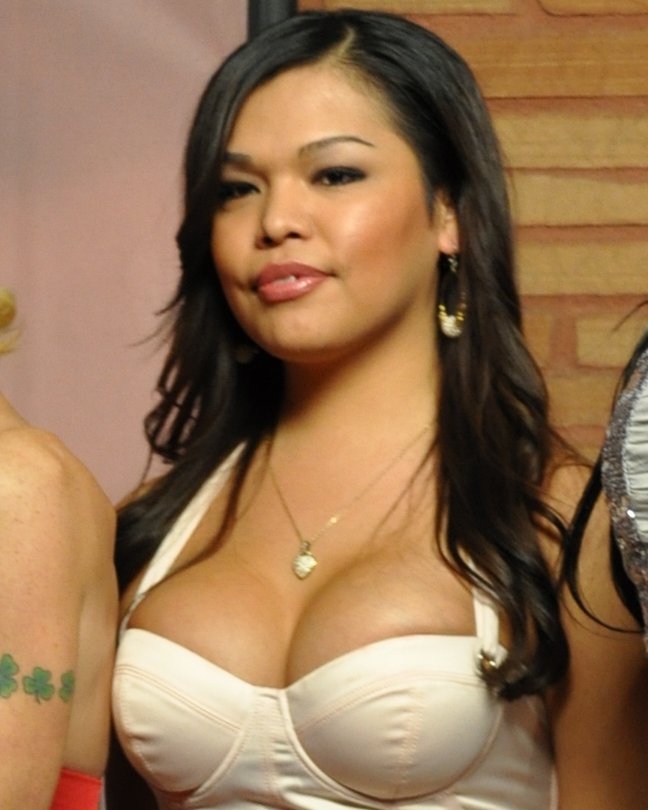
Carmen Moore — photograph 1 of 3
CMDebut 2008
CM

Carmen Moore

Born in the Navajo Nation; the opening line of her own Wikipedia biography calls her a Native American actress
retired medium confidence 0 verified wins
Born
1986Navajo Nation, northwestern Arizona
Age
40
Active
2008–Worked from 2008 until her death in Las Vegas, Nevada on 31 August 2018, aged 32.
Credits
~34
Height
—
Hair / Eyes
—not documented
Why Carmen is included

Moore is the clearest case this page found, and the only one where the identity is anchored to a specific nation rather than to an unspecified "descent" claim: she was born in 1986 in the Navajo Nation in northwestern Arizona, worked as Kymberly Yazzie as well as under her own name, and the opening sentence of her English Wikipedia biography calls her a Native American actress.

She was a transgender woman and identified as Nádleehi and Two-Spirit — Diné terms, not terms applied to her from outside. She performed from 2008 until her death in 2018 and is credited with 34 original features.

Her mainstream crossover is the part of the record that matters most here: she played Felixcia in Sydney Freeland’s Drunktown’s Finest (2014), a film made on and about the Navajo Nation, and was nominated for Best Actress at that year’s American Indian Film Festival. She is presented alongside the trans performers this site ranks nowhere else on the site.

The case against: Her adult-industry record is three nominations and no win of any kind — Best Solo Website at the 2011 Transgender Erotica Awards, AVN Transsexual Actress of the Year in 2014, and a 2014 NightMoves nomination. No studio list or itemised filmography is published anywhere this page could check, and whether she was an enrolled member of the Navajo Nation, as distinct from born within it, is not documented.
Career and credits

Career

Carmen Kym Moore, who also worked as Kymberly Yazzie, was born on 21 February 1986 in the Navajo Nation in northwestern Arizona. She began performing in 2008 and English Wikipedia credits her with 34 original features across the decade that followed. She was a transgender woman and identified as Nádleehi and Two-Spirit. In 2014 she made her mainstream feature debut as Felixcia in Drunktown’s Finest, Sydney Freeland’s film set on the Navajo Nation, and was nominated for Best Actress at that year’s American Indian Film Festival. Her adult-industry recognition is a run of nominations rather than wins: Best Solo Website at the 2011 Transgender Erotica Awards, Transsexual Actress of the Year at the 2014 AVN Awards, and a 2014 NightMoves nomination. She died in Las Vegas on 31 August 2018, aged 32.

Signature: The only performer this pass could document whose Native American identity is stated in the opening line of her own English Wikipedia biography and anchored to a specific nation she was born in, rather than to an unspecified "descent" claim — and the only one whose mainstream crossover work, Drunktown’s Finest, was itself made on and about that nation.

Award record
  • 2011Transgender Erotica Awards — Best Solo Website (nomination)
  • 2014AVN — Transsexual Actress of the Year (nomination)
Show full award record (1 more) Show fewer
  • 2014NightMoves — Best Transsexual Performer (nomination)

Mainstream credits

  • Drunktown’s Finest (2014), as Felixcia — mainstream feature debut
  • Best Actress nomination, American Indian Film Festival (2014)
Official links
Sources and verification1 source
Last audited 6 September 2026 · Wikipedia — Carmen Moore (American actress)
Not yet confirmed:
  • No adult-industry award win of any kind is documented — her record is three nominations
  • Studios and an itemised filmography are not published by any source this programme trusts
  • Cause of death is not documented by English Wikipedia
  • Whether she was an enrolled member of the Navajo Nation, as distinct from being born within it, is not documented
Definitions

A costume category, a descent claim, and an affiliation — three different things

Almost everything filed under this keyword online is a content tag rather than a fact about a person. A "Native American" category on a tube site is applied by whoever uploads or catalogues the video, and what it usually describes is set dressing: a feather, a fringe, a scene premise. That is a statement about a costume in one production, not about the ancestry of the person wearing it, and this site does not treat the two as the same claim. The same distinction runs through the ebony pornstars page and the BBC pornstars page, both of which name their keyword as a marketing tag before ranking anybody.

The second thing that gets filed here is a descent claim: a line in a biography saying a performer is "of Native American descent," or "part Cherokee," with no nation, no band, no enrolment and no source beyond whoever wrote the profile. Seven of the names this page checked are exactly that. A descent claim is not nothing — it may well be true — but it is unverifiable in the specific way that matters, because there is no body that could confirm or refute "part Cherokee" as a general statement. There are only tribes, and tribes keep rolls.

The third thing, and the only one this page publishes, is a stated affiliation: a performer saying, in her own words, which nation she belongs to or was born in. Carmen Moore was born in the Navajo Nation and identified as Nádleehi and Two-Spirit — Diné terms for a specific gender role within a specific nation, not a generic ancestry label. Hyapatia Lee names the Lost River Band of the Cherokees, which is a specific group, and this page reports both her statement and the documented fact that the group is not federally recognised. Naming the group is what makes the claim checkable at all; a vaguer claim could not have been checked either way.

None of this is a judgement about who is or is not Indigenous, and this page makes none. Tribal citizenship is determined by tribes, not by encyclopaedias and certainly not by ranking sites. What this page can do is state, for each person it names, exactly what the record says and who said it — which is the whole difference between this list and the ones that run to fifteen names.

TermWhat it meansHow it differs
"Native American" (tube-site tag)A browsing and search category applied to a video by an uploader or studio, usually describing costume and scene premise.Not a claim about anyone’s ancestry, and not treated as one here — the tag describes a production, the way a "schoolgirl" or "nurse" tag does.
Descent claimA biographical line stating a performer is "of Native American descent" or "part Cherokee," typically with no nation named and no source beyond the profile writer.Not published on this page. Unverifiable in principle, because there is no body that adjudicates a general ancestry claim — only tribes, which keep enrolment rolls.
Stated affiliationA performer naming, in her own words, a specific nation, band or Indigenous identity — the standard this page actually applies.A narrower bar than a descent claim, and the reason this page names two people rather than nine.
Federally recognised tribeA tribal nation with a government-to-government relationship with the United States. For Cherokee, exactly three: the Cherokee Nation, the Eastern Band of Cherokee Indians and the United Keetoowah Band of Cherokee Indians.Distinct from a heritage group, which is an association of people who identify as Cherokee but do not hold, and often do not qualify for, enrolment in any of the three.
Heritage groupAn unrecognised association organised around a claimed Indigenous identity. The Lost River Band of the Cherokees in Mitchell, Indiana, which Hyapatia Lee names, is one.Not a tribe, and Wikipedia’s own article on these groups records sustained criticism from recognised tribes that they misrepresent the culture they claim. Stated here because the record states it, not as a finding of this page.
Nádleehi / Two-SpiritDiné and pan-Indigenous terms for gender roles outside the male/female binary, used by Carmen Moore about herself.Terms of self-identification from inside a specific tradition — the opposite of an outsider’s tag, and the strongest single indicator in this page’s research that a claimed identity is the person’s own.
Context

A category with no performers, a claim with 819,105 claimants

1970s–1980s

The best-known claim belongs to someone whose adult record cannot be built

The most famous person to combine an adult-film past with a stated Native American identity is not a pornographic performer in any documented sense. Sonny Landham (1941–2017), later Billy Sole in Predator and Billy Bear in 48 Hrs., appeared in pornographic films early in his career for financial reasons, according to his own Wikipedia biography, and stated in his own words that he was half Cherokee and one-eighth Seminole. That is a clean self-statement — but no title, year, studio or credit count for the adult work is documented anywhere this page could check, which leaves nothing to build a record from. He is named here because leaving out the single best-known case without explaining why would be worse than including him badly.

1984–1995

A Hall of Fame career, and a claim through an unrecognised group

Hyapatia Lee debuted in 1984 and retired in 1993, taking the 1991 AVN Award for Best Actress (Film) for The Masseuse, AVN Hall of Fame induction in 1993, XRCO Hall of Fame induction in 1994 and the Free Speech Coalition’s Lifetime Achievement Award in 1995. Her stage persona was built around a claimed Cherokee identity throughout, and she has referred to herself as a "Blessed Woman" of the Lost River Band of the Cherokees. The Lost River Band, in Mitchell, Indiana, is an unrecognised heritage group rather than one of the three federally recognised Cherokee tribes. Both of those facts sit in the same sentence on her own Wikipedia page, and both belong on this one.

2008–2018

The one case where the nation is named and the work is documented

Carmen Moore, who also worked as Kymberly Yazzie, was born in the Navajo Nation in 1986, performed from 2008, and is credited with 34 original features. She identified as Nádleehi and Two-Spirit. In 2014 she played Felixcia in Sydney Freeland’s Drunktown’s Finest — a mainstream feature set on the Navajo Nation — and was nominated for Best Actress at the American Indian Film Festival that year, which is the only instance this page found of an Indigenous film institution recognising a performer who also worked in adult film. She died in Las Vegas in 2018, aged 32.

2010–2026

The tag grows; the documented population does not

Across the same period the "Native American" browsing category became a fixture on every major platform, while the documented population stayed at two. English Wikipedia still has no category for Native American adult performers; its Canadian adult-performer categories return nothing at all for First Nations, Métis, Cree or Indigenous. What the American categories do return under these search terms is nine names carrying an unspecified descent line, and one — Bailey Jay — who names Ute among her own ancestry in her own tweets and is ranked on this site under mixed-race pornstars instead.

Editorial process

The other names, checked one at a time

Nine further names surface under this keyword or in English Wikipedia’s adult-performer categories when they are searched for Cherokee, Navajo, Nez Perce, Ute, Seminole, Apache, Lakota, Ojibwe, Choctaw, Blackfeet or Indigenous. Each was checked individually. None is named here to suggest that anyone is misrepresenting themselves — in every case the problem is who wrote the claim, not whether it is true.

Real, checkable performers whose ancestry line is not in their own words

GD
Gianna Dior, Dyanna Lauren, Chloe Amour and Xxlayna Marie

All four carry a Wikipedia line giving Native American or Cherokee among several ancestries — "of Italian and Native American descent," "Cherokee, Spanish and Mexican descent," and so on. In each case the line names no nation, no band and no enrolment, and none is cited to a statement by the performer. This page publishes a stated affiliation, not a descent claim written by a profile writer.

LZ
Lezley Zen

The "Cherokee Indian and part Irish" line that follows her everywhere traces to a 2003 AVN Insider profile that opens "This stunner is…" — a marketing write-up about her rather than a statement by her. She holds a genuine 2005 AVN Award for Best Supporting Actress, and none of that is in question; the ancestry claim simply is not hers on the record.

RI
Ryan Idol

His Wikipedia biography gives "French, Irish, and Native American ancestry" with no nation named and no citation to anything he said. A real career and a real biography, and nothing this page could publish an Indigenous affiliation on.

GG
Gordon Grant

The Colt Studios model, born Don Bowman in 1949, is documented on Wikipedia as "of Dutch and Nez Perce Native American heritage" — the only specific nation among the excluded names, which is why he was checked twice. The claim appears on a posthumous biography with no statement in his own words behind it, and he holds no award of any kind. Left off on sourcing, not on doubt about the claim.

SL
Sonny Landham

Stated his own ancestry as half Cherokee and one-eighth Seminole, which clears this page’s identity rule outright. He is left off because the other half of the record is missing: his adult-film work is mentioned on his Wikipedia biography without a single title, year, studio or credit count anywhere this pass could check. He is discussed in the history section instead.

Bailey Jay
Bailey Jay

Names Ute among her own ancestry in two of her own tweets from 2016, both cited on her Wikipedia article — an impeccable self-statement. She is not given an entry here because she already carries one on this site’s mixed-race pornstars ranking, and this site does not enter the same person twice.

Clears the identity rule, excluded on conduct

Mercedes Carrera

Stated her own ancestry in a September 2018 post — Puerto Rican, described by her as itself a mix of African, Jewish and European, plus Native American and Swedish — which meets this page’s identity standard. She is excluded under this programme’s conduct policy: she has been held since February 2019 on charges of child sexual abuse, and as of this audit the case remains untried. The charges are allegations, no conviction exists, and none is implied. A ranking or a companion listing is an endorsement of a professional record, and this site will not extend one while that case is open.

Background

Why the claimed population and the documented population are so far apart

This is not a case of a small community being under-covered by award bodies, which is the argument the ebony pornstars page makes about a different population. It is a case of a marketing category that mostly does not describe the people it is attached to, sitting on top of a national pattern of ancestry claims that outrun the records by roughly three to one.

The Cherokee-claim gap is measurable, and it is enormous

819,105 Americans reported Cherokee heritage in the 2010 Census — more than for any other named tribe — against roughly 250,000 people enrolled across the three federally recognised Cherokee tribes. That is not a claim about any individual, and this page makes none. It is the base rate a list-builder is working against: if you accept every unspecified "part Cherokee" line you find, most of what you publish will be self-description rather than documented affiliation, and you will have no way of telling which is which.

Heritage groups are a documented phenomenon, not an insinuation

English Wikipedia maintains an article on Cherokee heritage groups: associations of people who identify as Cherokee but do not hold enrolment in the Cherokee Nation, the Eastern Band of Cherokee Indians or the United Keetoowah Band. It records sustained criticism from recognised tribes that such groups misrepresent Cherokee culture and identity, and that some incorporate Hollywood-derived dress and invented ceremony. The Lost River Band of the Cherokees, which Hyapatia Lee names, is a group of this kind. Reporting that is not an accusation against her; it is the context her own claim sits in, and omitting it would be the dishonest choice.

The tag on a platform is almost always about costume

Where a "Native American" category exists on a content platform it is applied by an uploader or a studio and describes the premise of a specific video — set dressing, a scene concept, a costume — in exactly the way a "schoolgirl" or "cheerleader" tag does. Nothing in that process involves checking, or even asking, who the performer is. Treating that tag as a demographic claim is the mistake that produces most of the long lists competing for this term.

Award bodies do not record it, so there is no secondary source to fall back on

For most categories this site covers, an award ceremony’s own page is the backstop when a Wikipedia biography is missing — the method the BBC pornstars page uses for eleven of its fourteen performers. That backstop does not exist here. AVN, XBIZ, XRCO and NightMoves record names, categories and years; none records ancestry or tribal affiliation, and there is no Indigenous equivalent of the Urban X Awards for this industry. The one Indigenous institution that appears anywhere in this page’s research is the American Indian Film Festival, which nominated Carmen Moore for a mainstream role.

Being strict costs this page names, and the alternative costs more

Seven performers with real Wikipedia biographies were left off because the ancestry line attached to them was written by someone else and named no nation. Some of them may well be exactly what those lines say. But a ranking site that publishes an unverifiable identity claim about a real person is making a claim on that person’s behalf, in a domain — Indigenous identity — where being wrong is a specific and well-documented harm to actual tribal nations, not a minor factual slip. Two names is the honest output.

Questions

Frequently asked questions

How many Native American pornstars are there?

Two have stated an Indigenous affiliation themselves in a citable source: Carmen Moore, born in the Navajo Nation and described as a Native American actress in the opening line of her own Wikipedia biography, and Hyapatia Lee, who has called herself a "Blessed Woman" of the Lost River Band of the Cherokees. That figure describes what survives a source check, not an estimate of every Indigenous person who has ever worked in adult film.

Why isn’t there a ranked list on this page?

Two names is below this site’s three-name floor for a ranking, and the two careers are not comparable on any axis a score could honestly represent — an eight-year run with an AVN Best Actress win and two Hall of Fame inductions against a ten-year run with three nominations and one mainstream film role. Both are presented in full, unranked.

Is a "Native American" tube-site category about the performer’s ancestry?

Almost never. The tag is applied by whoever uploads or catalogues the video and describes the premise and costume of that specific production, in the same way a "nurse" or "schoolgirl" tag does. Nothing in that process involves establishing who the performer is, and this site does not treat a content tag as a demographic claim.

Who was Carmen Moore?

Carmen Kym Moore, who also worked as Kymberly Yazzie, was born in the Navajo Nation in northwestern Arizona in 1986 and performed from 2008 until her death in 2018, credited with 34 original features. She was a transgender woman and identified as Nádleehi and Two-Spirit. She played Felixcia in Drunktown’s Finest (2014) and was nominated for Best Actress at the American Indian Film Festival that year.

Is Hyapatia Lee Cherokee?

She has described herself as a "Blessed Woman" of the Lost River Band of the Cherokees, a heritage group in Mitchell, Indiana. Her own Wikipedia page records in the same sentence that the Lost River Band is unrecognised — that is, not one of the three federally recognised Cherokee tribes. This page reports her statement and that context together, and takes no position on her ancestry, which is a matter for tribes rather than for a ranking site.

What is the difference between a Cherokee heritage group and a Cherokee tribe?

Three Cherokee tribes are federally recognised: the Cherokee Nation, the Eastern Band of Cherokee Indians and the United Keetoowah Band of Cherokee Indians. A heritage group is an association of people who identify as Cherokee but do not hold enrolment in any of the three. Wikipedia’s article on these groups records sustained criticism from recognised tribes that they misrepresent Cherokee culture and identity.

Why are performers who are described as "part Cherokee" left off?

Because in every case checked for this page, that line was written by a profile writer rather than the performer, and it named no nation, no band and no enrolment. There is no body that can confirm or refute a general "part Cherokee" claim; there are only tribes, and tribes keep rolls. Publishing an unverifiable identity claim on a real person’s behalf is a harm this page is not willing to risk for a longer list.

Does Wikipedia have a category for Native American adult performers?

No. Category:Native American pornographic film actors was checked directly for this page and returns a 404 — the category does not exist, while equivalent categories for many other ethnicities are populated and maintained. The Canadian adult-performer categories, queried for First Nations, Métis, Cree and Indigenous, return nothing at all.

Is Sonny Landham a Native American pornstar?

He stated in his own words that he was half Cherokee and one-eighth Seminole, and his Wikipedia biography says he appeared in pornographic films early in his career for financial reasons. He is not listed here because no title, year, studio or credit count for that work is documented anywhere this page could check, so there is no professional record to present. He is discussed in the history section.

Will this page ever become a ranking?

If a third performer states an Indigenous affiliation in a citable source and has a documented professional record to go with it, yes — that person would be added to a seed batch and this page rebuilt around a scored roster. Publishing three names as a ranking today would mean scoring careers that are not comparable, and lengthening the list would mean publishing descent claims nobody can check.

Most read

What everyone else is reading

Recently updated

Sources and verification

How this page was researched

This page publishes no ranking, so the Performer Index was not applied to it. It is sourced and corrected to the same standard as every ranking on this site — the difference is that the finding here is a documented absence rather than an order. The full rubric, including who is excluded from a ranking and why, is published on the Ranking methodology page.

This page applies one rule and prints it where you can check it. A performer appears below only where they have stated an Indigenous affiliation themselves, publicly, in a source that can be cited. Not a stage name. Not a photograph. Not a browsing tag. Not a "she looks it." That rule produces two people, and it excludes several real, checkable performers whose Wikipedia biographies do carry a Native American line — because in every one of those cases the line is somebody else writing about them, with no nation, band or enrolment attached to it.

The reason to be strict here rather than generous is specific to this category and does not apply to most of the others on this site. Claimed Indigenous ancestry in the United States runs an order of magnitude ahead of documented Indigenous ancestry: 819,105 people told the 2010 Census they were of Cherokee heritage, against roughly 250,000 enrolled across the three federally recognised Cherokee tribes. A page that repeated every "part Cherokee" line it found would not be documenting Native American performers. It would be documenting a well-known feature of American self-description, and passing it off as a roster.

⚠︎

Before you publish this page: This page documents two performers who have stated an Indigenous affiliation themselves, presented unranked because two careers this different cannot be honestly scored against one another and because two names sits below this site’s floor for a ranking. Both records are medium confidence. Hyapatia Lee’s date of birth is unpublished, her debut year is given two ways on the same Wikipedia page, no itemised filmography survives, and the Cherokee group she names is documented as unrecognised rather than federally recognised — all four facts are stated on her entry. Carmen Moore holds no adult-industry win of any kind, no studio list or filmography is published for her, and enrolment in the Navajo Nation, as distinct from birth within it, is not documented. Nine further names were checked individually and excluded, seven of them because the ancestry line attached to them was written by somebody other than the performer. One further candidate meets the identity standard and is excluded on conduct grounds with the charges stated as untried. If a future source meeting this programme’s sourcing standard records a further performer’s own statement of tribal affiliation, that record belongs in content/seed/nativeamerican.mjs and this page should be rebuilt around it rather than amended by hand.

Transparency

Corrections and update log

Factual corrections are made within 48 hours of verification and logged, dated and described at the foot of the article. Changes to the scoring model itself are logged the same way - when we found that Lifetime Achievement honours were being scored as Performer of the Year wins, we published the fix and the resulting rank changes rather than quietly re-running the build. Cadence: Full re-audit every six months; award pillars updated within 14 days of each major awards ceremony. Next full audit: 2027-02-20.

What changed in this edition

  • First edition. Published as a reference page with no ranked roster: two performers have stated an Indigenous affiliation themselves, which is below this programme’s three-name floor for a ranking, and the two careers are not comparable on any axis a composite score could honestly represent.
  • English Wikipedia’s Category:Native American pornographic film actors was checked directly and does not exist — the URL returns 404. Its Canadian equivalent, queried for First Nations, Métis, Cree and Indigenous, returns nothing at all.
  • Carmen Moore (also Kymberly Yazzie) included on the strength of the opening line of her own English Wikipedia biography, which describes her as a Native American actress, together with a documented birthplace inside the Navajo Nation and her own identification as Nádleehi and Two-Spirit.
  • Hyapatia Lee included on her own self-description as a "Blessed Woman" of the Lost River Band of the Cherokees, with the same Wikipedia sentence’s record that the Lost River Band is an unrecognised heritage group stated on the page rather than omitted.
  • Seven further names surfaced by category searches — Gianna Dior, Dyanna Lauren, Chloe Amour, Xxlayna Marie, Lezley Zen, Ryan Idol and Gordon Grant — were checked individually and left off: every one carries an unspecified "Native American" or "Cherokee" descent line written by somebody other than the performer, with no nation, band or enrolment named.
  • Sonny Landham stated his own ancestry as half Cherokee and one-eighth Seminole and is discussed in the history section, but no title, year, studio or credit count for his adult-film work is documented anywhere this pass could check, so no record was built.
  • Bailey Jay names Ute among her own ancestry in two of her own 2016 tweets, cited on her Wikipedia article. She is named here and ranked on this site’s mixed-race pornstars page rather than given a second entry.
  • Mercedes Carrera clears this page’s identity rule on her own September 2018 post and is excluded on this programme’s conduct policy instead. The charges against her are untried; no conviction exists and none is implied.
2026-09-06
edition

First edition, published as articleType: reference with no ranked roster. Two performers named unranked in the companion roster, each carrying an accurate occupation label.

2026-09-06
sourcing

English Wikipedia’s Category:Native American pornographic film actors checked directly and confirmed not to exist (HTTP 404). The Canadian adult-performer categories, queried for First Nations, Métis, Cree and Indigenous, returned no results.

2026-09-06
sourcing

Carmen Moore included on the opening line of her own English Wikipedia biography, a documented birthplace inside the Navajo Nation, and her own identification as Nádleehi and Two-Spirit. Hyapatia Lee included on her own self-description as a "Blessed Woman" of the Lost River Band of the Cherokees, with the same sentence’s record of that group being unrecognised published alongside it.

2026-09-06
exclusion

Gianna Dior, Dyanna Lauren, Chloe Amour, Xxlayna Marie, Lezley Zen, Ryan Idol and Gordon Grant checked individually and excluded: each carries an ancestry line written by someone other than the performer, with no nation, band or enrolment named. Lezley Zen’s line traces specifically to a 2003 AVN Insider marketing profile.

2026-09-06
exclusion

Sonny Landham clears the identity rule on his own statement but no title, year, studio or credit count for his adult-film work could be documented, so no record was built. Covered in the history section instead.

2026-09-06
exclusion

Mercedes Carrera clears the identity rule on her own September 2018 post and is excluded under this programme’s conduct policy: untried charges of child sexual abuse, held since February 2019. No conviction exists and none is implied.

2026-09-06
note

Bailey Jay names Ute among her own ancestry in her own 2016 tweets and is discussed here by name rather than entered twice — she is ranked on this site’s mixed-race pornstars page.

Accountability

About this guide

The Pornstar Ranked Editorial Desk

Adult-industry research team

Pornstar Ranked's editorial desk has catalogued adult-film credits, award records and studio filmographies since 2019. Every ranking on this site is built from primary sources — award-body archives, studio release data and performer-verified profiles — and re-audited on a fixed schedule.

  • Cross-references AVN, XBIZ and XRCO award archives
  • Maintains a 4,000+ performer credit database
  • Publishes a public correction log for every ranking

✓ Fact-check pass

Every date, award and credit is matched against at least two independent sources before publication.

✓ Consent & dignity pass

Copy is reviewed to ensure performers are described as professionals. No leaked, non-consensual or unverified private material is referenced or linked.

✓ Legal pass

All listed performers are verified adults with documented professional careers. Pages carry RTA labelling and 18 USC 2257 signposting.

◈

Disclosure. Pornstar Ranked is reader-supported and editorially independent. We do not accept payment for placement on any ranking, and no performer, studio or platform can buy, influence or remove a position. Where we link to a paid platform, the link may be affiliate-tracked — this never affects a rank or a score.